
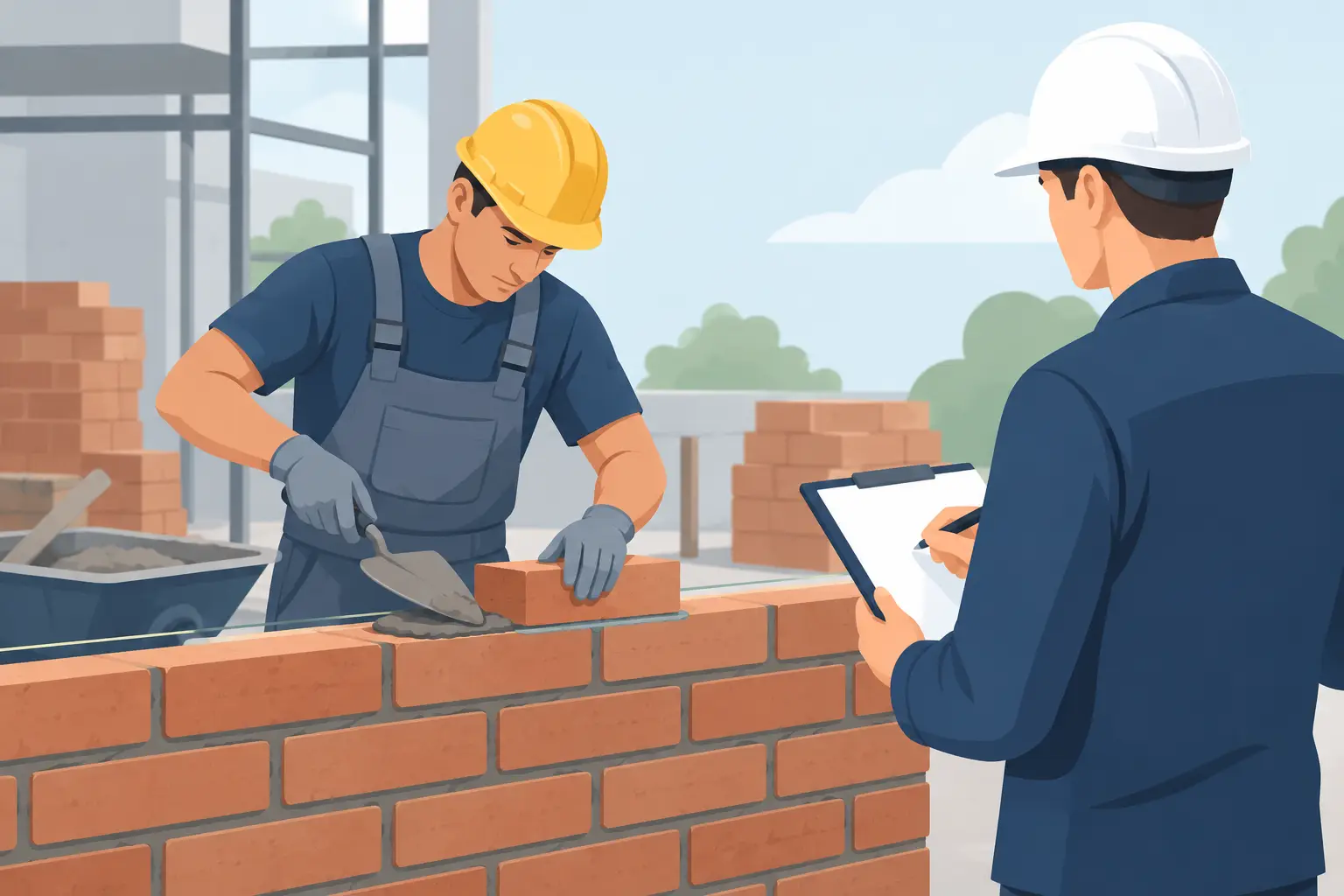
A mason can talk confidently about block, brick, and mortar all day. The real test is whether their work holds a line, sheds water, meets the plans, and keeps moving when site conditions change. That is how to assess masonry skills without betting an active project on a polished resume or a rushed interview.
For construction employers, the goal is not to find the person with the longest work history. It is to confirm that a candidate can perform the specific masonry work your crew needs, safely and to spec. A strong assessment combines verified experience, visible proof of workmanship, trade-specific questions, and a practical evaluation when the role justifies it.
Start With the Scope, Not the Resume
“Mason” can mean very different things from one project to the next. A candidate who excels at commercial CMU production may not be the right fit for restoration work, thin veneer, hardscape, refractory installation, or detailed architectural brickwork. Before reviewing applicants, define the work in terms a foreman can evaluate.
Clarify the material, production expectations, finish standard, equipment involved, and site conditions. Is the job laying standard CMU on a commercial shell, building retaining walls, repairing historic brick, installing stone veneer, or leading a small crew? Will the mason read layout drawings, run leads, set embeds, operate a telehandler, or work from scaffold?
This step prevents a common hiring mistake: treating general masonry experience as proof of fit. Ten years of experience is valuable, but it does not automatically translate to the pace, precision, or specialty your project requires.
Review Evidence of Real Masonry Work
A resume tells you where someone says they worked. A portfolio and verified employment history help show what they actually did there. Ask candidates to provide photos of completed work, with enough context to judge the scope. Close-up photos can show joint quality and finish, while wider shots reveal alignment, coursing, corners, openings, and overall consistency.
Look for clean, consistent mortar joints; straight courses; plumb walls; properly formed corners; neat cuts around penetrations; and a finish that matches the intended assembly. In brickwork, pay attention to head joints, bed joints, bond pattern, and whether the work looks uniform across a larger wall. In blockwork, check for consistent joint thickness, clean faces, accurate openings, and evidence that reinforcement and grout requirements were understood.
Photos are useful, but they are not enough on their own. Ask the candidate what portion of the work they completed. Did they lay the wall, run the leads, handle layout, mix mortar, install flashing, supervise helpers, or complete repairs? A skilled mason can explain their role clearly and will usually be specific about materials, tools, production challenges, and corrections made in the field.
Employment verification adds another layer of confidence. Confirm job titles, dates, project types, and whether the worker was a lead mason, mason tender, apprentice, or laborer. A candidate should not be disqualified for being early in their career, but their title and claimed responsibilities should match the level of work you need.
Use Questions That Reveal Field Judgment
The best interview questions are not trivia contests. They uncover how a mason thinks through layout, quality control, weather, sequencing, and safety. Ask about situations they have faced, then listen for a practical process rather than a vague answer.
For example, ask how they establish a wall line and keep it plumb as the work rises. A capable candidate should reference layout, corners or leads, levels, strings, checking courses, and correcting issues early rather than waiting until the wall is substantially built.
Ask what they do when mortar begins to set too quickly in hot, dry conditions or when cold weather threatens the work. The answer will vary by product, manufacturer requirements, and jobsite plan, but a qualified mason should recognize that weather affects mortar performance and curing. They should not suggest adding water indiscriminately or ignoring temperature limits just to maintain production.
Other useful prompts include:
- How do you verify the dimensions of an opening before building toward it?
- What do you check before placing CMU that will receive grout or reinforcement?
- How do you identify and correct a wall that is beginning to go out of plumb?
- What causes efflorescence, and what jobsite practices help reduce it?
- When would you stop work and bring a layout, flashing, or structural issue to the superintendent?
Strong answers show judgment. They include checks, communication, and an understanding that masonry failures often start with small mistakes in layout, moisture control, material handling, or sequencing.
Run a Paid Practical Masonry Skills Test
For high-volume work, lead roles, or projects with tight finish requirements, a short paid skills test is one of the clearest ways to assess masonry skills. Keep it relevant to the job and safe for the candidate. A 60- to 90-minute evaluation can reveal more than a long interview if it is planned well.
Set up a small sample that reflects actual work: a short CMU wall with a corner and opening, a brick panel with a specified bond pattern, or a stone veneer section with returns and cuts. Provide the same materials, tools, plans, and expectations the worker would reasonably have on site. Do not turn the test into unpaid production work. Pay for the evaluation and explain the criteria before it begins.
Have an experienced superintendent, foreman, or lead mason score the work against a simple rubric. Evaluate layout and measurement accuracy, plumb and level, joint consistency, material handling, cut quality, tool control, pace, housekeeping, and safety practices. The candidate does not need to produce a perfect showcase panel under unfamiliar conditions. You are looking for sound fundamentals, control, and the ability to self-correct.
Watch how they work between tasks. Do they check their line before the error becomes expensive? Do they protect finished work, keep the area organized, and communicate when something on the drawing is unclear? These habits matter because they affect rework, schedule pressure, and crew performance every day.
Verify Safety, Credentials, and Job Readiness
Masonry is physically demanding and frequently performed around scaffold, lifts, silica-generating cutting tools, heavy materials, and changing weather. Technical skill without safe work habits creates risk for the entire crew.
Discuss the equipment and exposure points tied to the role. Depending on the project, this may include fall protection, scaffold awareness, lift operation, respirator use, silica control, rigging awareness, and safe material staging. Verify certifications when they are required for the site or equipment. Requirements differ by contractor, jurisdiction, project owner, and union agreement, so do not assume a credential applies everywhere.
Also verify practical readiness. Can the worker reliably reach the project, work the scheduled shift, and start when the job needs them? Are they prepared for travel, overtime, or multi-story work if those conditions are part of the role? These are operational questions, not afterthoughts. A highly skilled mason who cannot meet the project’s actual needs may still be the wrong hire for that opening.
Check References for Quality and Reliability
Reference checks work best when they are specific. Instead of asking whether the candidate was “good,” ask a former supervisor what type of masonry they performed, how independently they worked, and whether they could maintain quality at production pace.
Ask whether the mason followed layout and safety direction, handled corrections professionally, showed up consistently, and worked effectively with tenders, operators, and other trades. For lead candidates, ask about crew coordination, material planning, punch-list performance, and communication with the superintendent.
A reference does not need to praise every aspect of a candidate for the conversation to be useful. Honest feedback about the conditions where someone performs best can help you place them correctly. A detail-driven restoration mason may be ideal for repair work but not a fast-track block crew, while a high-output commercial mason may need support on finish-sensitive architectural work.
Make the Hiring Decision With a Consistent Scorecard
Avoid hiring from memory or first impressions. Use the same scorecard for every candidate applying to the same role. Weight the areas that matter most for the project: proven experience with the material system, practical test results, quality standards, safety record, reliability, and ability to work with the crew.
A verified trade hiring platform such as go2work can make the early screening faster by bringing portfolios, work history, credentials, and direct communication into one process. That gives your team more time to evaluate fit on the details that protect quality and schedule.
For masonry candidates, the assessment process is also a chance to stand out. Clear project photos, accurate role descriptions, current credentials, and straightforward answers about the work you do best make it easier for employers to recognize your value.
The right mason is not simply the person who can lay material quickly. It is the worker who can build accurately, protect the assembly, solve field problems early, and leave the next trade with a job done right.