
A job interview in the trades can be decided before you sit down. A clean truck, a current license, a sharp answer about safety, and proof of recent work all tell an employer the same thing: you are ready to show up and get the job done. This guide to trade job interviews helps skilled workers turn real field experience into a strong hiring conversation.
For electricians, plumbers, carpenters, HVAC technicians, welders, masons, and other tradespeople, the interview is rarely about polished corporate answers. Hiring managers need to know whether you can perform the work, work safely, communicate with the crew, and be dependable when the project schedule gets tight.
What Trade Employers Are Really Hiring For
Most construction and trade employers are balancing labor needs against real project risk. A bad hire can slow a crew, create rework, compromise safety, or leave a superintendent short-handed before an inspection. That is why the best interview answers give evidence, not just claims.
When an employer asks about your experience, they are listening for more than years in the trade. They want to understand the type of work you have handled, the tools and systems you know, the conditions you work well in, and how independently you operate. “I have ten years of experience” is a starting point. “I have ten years in commercial electrical work, including conduit bending, panel installation, service calls, and coordinating rough-ins with drywall and plumbing crews” is far more useful.
Reliability matters just as much as technical ability. Be prepared to speak clearly about your availability, transportation, willingness to travel if relevant, and the kind of schedule you can realistically support. Overpromising creates problems for everyone. A direct answer builds more trust than telling an employer what you think they want to hear.
Prepare Proof, Not Just Talking Points
The strongest candidates arrive with a simple, organized picture of their work history. Bring copies of your license or certifications if they apply to the role, along with an updated resume that lists the type of projects you completed. If you have a portfolio of finished work, keep it easy to review on your phone.
Photos can be especially valuable for finish carpentry, welding, masonry, HVAC installs, custom plumbing, electrical panel work, and other visible craftsmanship. Use photos that show clean, completed work. If a project is confidential, avoid sharing site details or customer information without permission.
Before the interview, identify four examples you can discuss comfortably:
- A project where you solved a difficult field problem
- A time you worked under a tight deadline without cutting corners
- A safety issue you identified or helped prevent
- A job where you coordinated effectively with another trade or crew
You do not need rehearsed speeches. You need clear examples that show judgment. A good structure is simple: explain the job, the problem, the action you took, and the result. Keep the focus on your role. Saying “we got it done” is fine, but employers also need to know what you personally contributed.
How to Answer Common Trade Interview Questions
“Tell me about your experience.”
Match your answer to the opening. If the company needs a residential service plumber, lead with service work, diagnostics, customer communication, and the systems you know. If it needs a commercial welder, lead with processes, materials, blueprint reading, certifications, and site conditions.
Avoid giving a full history from your first job onward. Start with your most relevant experience, then add one or two details that show range. If you are moving from residential to commercial work, say so directly and explain the transferable skills you bring.
“What tools and equipment can you operate?”
Be specific and honest. Mention the equipment you use regularly, not every tool you have ever touched. An employer may follow up with technical questions, so accuracy matters. If you have limited experience with a particular system, say that you understand the basics and are ready to learn the company’s process.
This is also a good time to distinguish between owning tools and knowing how to use them safely. A fully stocked tool bag is helpful. Sound judgment on the job is what gets you hired and kept on the crew.
“How do you handle safety?”
Do not answer with “I always follow safety rules” and leave it there. Talk about your actual routine. You might mention pre-task planning, personal protective equipment, lockout/tagout, ladder safety, equipment inspections, housekeeping, confined-space procedures, or reporting hazards to a foreman.
The right details depend on the trade and jobsite. A roofer, welder, and HVAC tech face different daily risks. What matters is showing that safety is part of how you work, not something you mention only because the interviewer asked.
“Why did you leave your last job?”
Keep your answer professional, even if the last employer was disorganized or difficult. Focus on what you want next: steadier work, a better fit for your specialty, a chance to take on larger projects, more responsibility, or a stronger safety culture.
Do not turn the interview into a complaint session. Employers know every job has rough days. They are watching to see whether you can handle conflict and pressure without creating more of it.
Questions You Should Ask the Employer
A trade interview runs both ways. The right role should give you a clear picture of the work, crew expectations, and path ahead. Ask what kind of projects are coming up, where crews typically work, and whether the position is project-based, seasonal, or ongoing.
Ask how the company handles overtime, travel, jobsite reporting, and required tools. For licensed work, confirm who pulls permits and what documentation the company expects. If compensation has not been discussed, ask about the pay range, benefits, and review process directly. It is better to clarify the full opportunity before accepting a job than after your first week on site.
You can also ask what separates their top performers from average hires. The answer tells you what the company values. Some teams prioritize speed. Others need people who can lead apprentices, handle customer-facing work, or manage complex installations. Neither approach is automatically better, but the fit matters.
Make Reliability Visible Before and After the Interview
Showing up 10 to 15 minutes early is still one of the simplest ways to make a strong impression. Confirm the interview location, bring the contact number, and plan for traffic, site access, parking, or security check-in. Construction offices and active jobsites are not always easy to find.
Wear clean, practical clothes that fit the setting. For an office interview at a large contractor, clean workwear or business-casual clothing usually works well. For a working interview or jobsite meeting, follow the company’s instructions and bring the required protective equipment. The goal is to look prepared, not overdressed.
After the conversation, send a short follow-up message that day or the next morning. Thank the interviewer, restate the role you discussed, and mention one relevant strength or project example. If they asked for credentials, references, or work photos, send them promptly. Slow follow-up can make a qualified candidate look less dependable.
Use Your Profile to Back Up the Interview
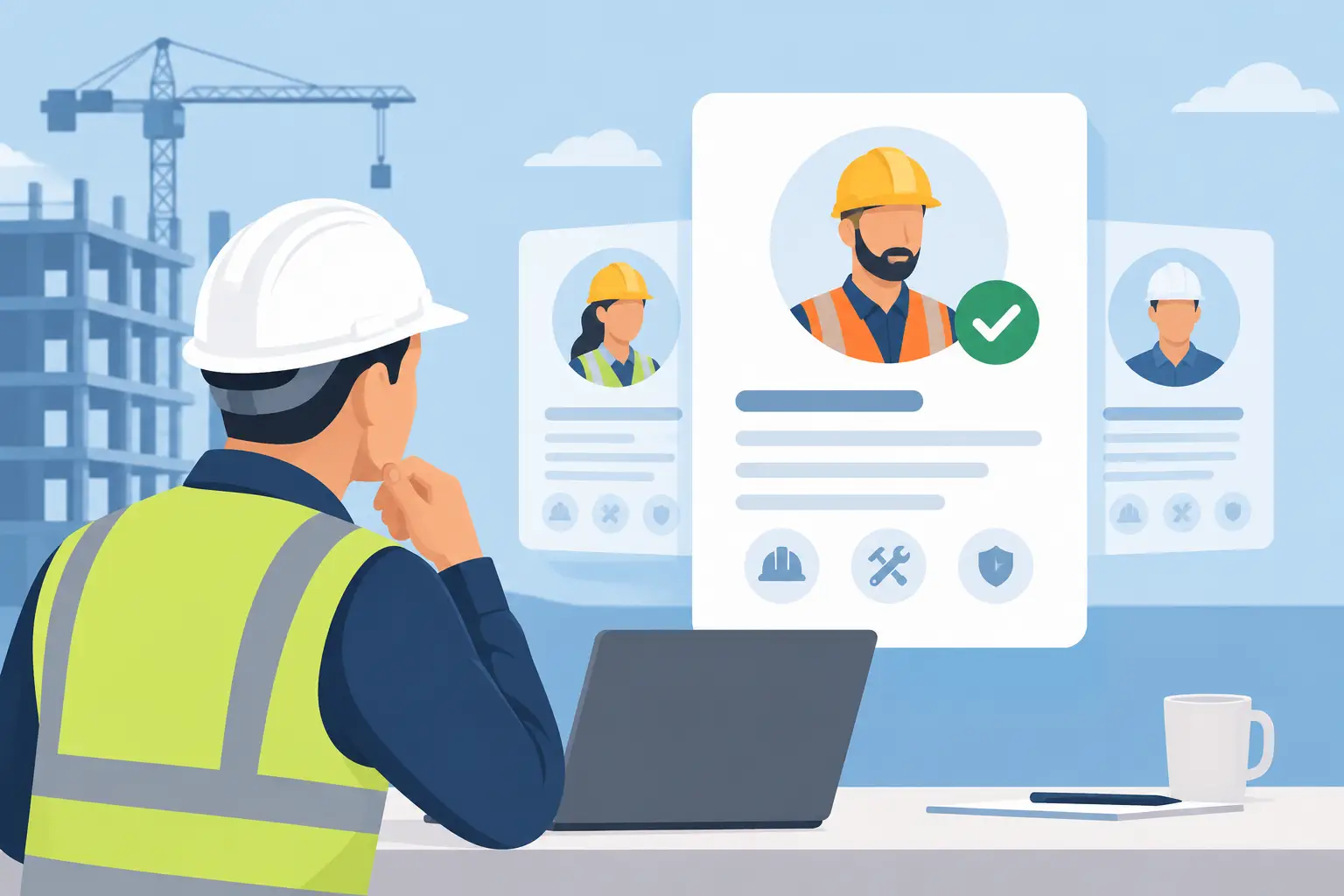
Your interview starts before the first call when an employer reviews your profile. Keep your trade specialty, years of experience, licenses, certifications, work history, and availability current. Add project photos when they strengthen your case, and make sure your contact information is accurate.
A verified profile reduces the back-and-forth that slows hiring. On go2work, workers can present credentials, employment history, and project experience in one place, while employers can focus on qualified candidates instead of chasing basic information. That gives you more time to discuss the work that matters.
The Interview Is a Jobsite Test in Conversation Form
Employers are looking for signs that you will make their next project easier to run. Speak plainly, use real examples, and be honest about where you are strongest. If you do not know an answer, explain how you would find it safely rather than guessing.
The candidate who stands out is not always the one with the longest resume. It is often the tradesperson who proves they can arrive ready, work with the crew, protect the jobsite, and take pride in the finished result.