
A superintendent gets word on Tuesday that the electrical rough-in crew is short two licensed hands. The schedule will not wait for resumes to trickle in, unanswered calls, or candidates who look qualified until the first conversation. A hiring platform for skilled trades changes that equation by helping contractors identify workers with the right credentials, availability, and jobsite experience before the delay turns into a costly problem.
Generic job boards were built for office roles and broad applicant volume. Construction hiring runs on proof, timing, location, safety requirements, and the ability to perform on site. The right platform gives employers a faster way to evaluate trade talent while giving skilled workers a credible place to show what they can do.
Why Trade Hiring Needs Its Own Platform
A resume alone rarely tells a contractor enough. It may list years of experience, but not the type of projects completed, licenses held, equipment used, or whether a worker has handled commercial tenant improvements, industrial shutdowns, custom residential work, or public projects.
That missing detail creates expensive friction. Project managers spend hours sorting through applicants who are outside the service area, lack required certifications, or have experience that does not match the scope. Meanwhile, qualified electricians, plumbers, HVAC technicians, welders, carpenters, and masons can miss strong opportunities because their skills are buried in a generic profile.
A trade-specific marketplace is designed around the questions that matter in the field. Can this person legally perform the work? Have they completed similar jobs? Are they available when the crew needs them? Can the employer contact them quickly? Those answers should be visible before an interview is scheduled.
For workers, the difference is just as practical. A strong portfolio of completed work can show craftsmanship in a way a job title cannot. Photos, project descriptions, licenses, work history, ratings, and verified credentials give a tradesperson a professional presence that travels beyond word-of-mouth referrals.
What a Hiring Platform for Skilled Trades Should Verify
Speed without trust only creates more rework. Employers need a short list of candidates they can act on, not a long list of names to investigate. That is why verification should be central to the platform experience.
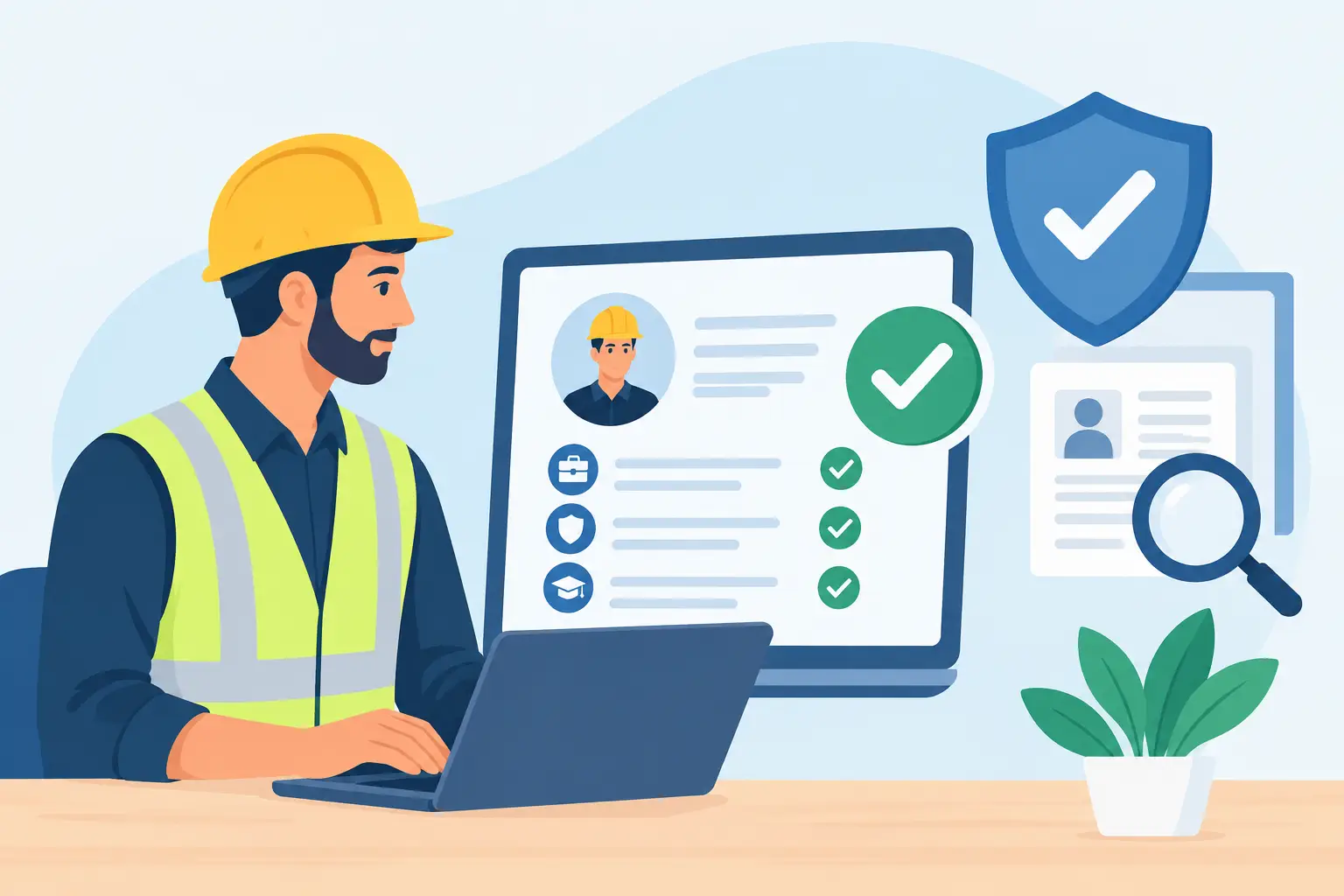
Start with identity and employment history. A profile should represent a real person with a work background that can be reviewed, rather than an anonymous application submitted in seconds. License validation matters where licensing is required, especially for electrical, plumbing, HVAC, and specialty work. Background checks may also be appropriate depending on the role, site access rules, customer environment, and company policy.
Verification is not a substitute for an employer's own hiring process. Every contractor has different insurance requirements, safety standards, union considerations, project specifications, and state or local compliance obligations. But verified information gives the conversation a more reliable starting point. Instead of asking whether a candidate is who they say they are, hiring teams can focus on fit for the work ahead.
The best platforms also make skill proof easy to review. A welder should be able to show relevant certifications and prior fabrication work. A carpenter should be able to present finish work, framing, or millwork projects. An HVAC technician should be able to highlight the systems and service environments they know. Specific proof produces better matches than broad labels.
Build a Faster Hiring Workflow
Technology helps only when it reduces steps for the people doing the hiring. A practical workflow begins with a clear job post that defines the trade, location, project type, required licenses or certifications, expected schedule, pay range where appropriate, and start date. Vague postings attract vague responses.
Next, use matching tools to prioritize candidates whose profiles align with the role. AI-powered matching can save time by comparing skills, experience, credentials, geographic fit, and availability. It should support human judgment, not replace it. A project manager still needs to assess communication, work quality, crew fit, and the details that make one candidate right for a specific site.
Once candidates are identified, direct messaging matters. Field workers are not sitting at a desktop refreshing email all day. Mobile-first communication lets employers ask a quick question, confirm availability, schedule a call, or move a candidate forward while the opportunity is still open. Fast follow-up is often the difference between making a hire and restarting the search.
A disciplined process can move from job post to qualified conversation quickly:
- Define the role around actual jobsite requirements, not a generic title.
- Filter for verified credentials, relevant project experience, and local availability.
- Review portfolios and work history for proof that matches the scope.
- Contact the strongest candidates promptly and set clear expectations for the next step.
- Complete final screening based on company policy, site rules, and the role's risk level.
This approach does not eliminate the need for judgment. It eliminates avoidable waiting and gives hiring teams a better use of their time.
Better Profiles Create Better Opportunities
For tradespeople, a profile should work like a digital tool belt: organized, job-ready, and built to demonstrate capability. Listing a trade is the starting point. Showing the work is what creates confidence.
Workers should keep licenses, certifications, service areas, availability, and employment history current. They should also add a focused portfolio. Five clear project examples are more useful than dozens of random jobsite photos. Each example should explain the work performed, the type of project, the materials or systems involved, and the worker's role on the crew.
A plumber who has completed medical office renovations should say so. An electrician experienced with commercial panel upgrades should make that visible. A mason with restoration work should show the finished detail. Employers are usually not searching for a person who can do everything. They are searching for a person who can do this job well.
Responsiveness also affects opportunity. Skilled workers are busy, and not every job will be a fit. Still, a prompt reply to an employer helps keep the process moving and builds a stronger professional reputation. The best platform tools make that possible from a phone, between sites or after a shift.
Where AI Helps and Where It Does Not
AI can improve trade hiring when it handles repetitive sorting work. It can surface candidates with matching licenses, nearby locations, relevant experience, and open availability. It can also help workers discover roles that align with their background instead of forcing them to search through irrelevant listings.
The trade-off is that a match score is only as good as the information behind it. An incomplete profile, an unclear job post, or outdated availability can lead to weak recommendations. Employers should treat AI results as a prioritized shortlist, then review credentials and project evidence. Workers should treat recommendations as leads worth evaluating, not automatic career decisions.
The human side remains nonnegotiable. Jobsite culture, safety discipline, leadership, travel expectations, and project pace are not always visible in a data field. Strong hiring combines technology's speed with a contractor's firsthand understanding of the work.
A Marketplace That Works for Both Sides
Construction labor markets work best when employers can hire with confidence and workers can compete based on verified skill. That is the purpose behind go2work: a specialized marketplace where trade professionals can present their experience and employers can find qualified talent without forcing construction hiring into a generic recruiting model.
For employers, the value is a more direct path from an open role to credible candidates. For workers, it is access to jobs where proven skills, credentials, and completed projects carry real weight. Both sides benefit when fewer conversations are wasted on mismatched expectations.
The next time a project needs qualified labor, do not start by casting the widest possible net. Start by defining the work clearly, looking for evidence that a person can perform it, and moving quickly when the right fit appears. That is how crews stay staffed, projects keep moving, and skilled work gets the respect it has earned.