A welding test can be the difference between getting called for a shutdown job and watching the crew mobilize without you. Employers do not just need to know that you can run a clean bead. They need proof that you can weld a specific process, position, material, and joint to the code their project requires.
That is why the best certifications for welders are not one-size-fits-all. The right credential depends on whether you want structural work, pipe welding, manufacturing, aerospace, shipbuilding, or inspection. For workers, the goal is to build credentials that match the jobs you want. For employers, the goal is to verify qualifications quickly and place the right welder on the right project.
What a Welding Certification Actually Proves
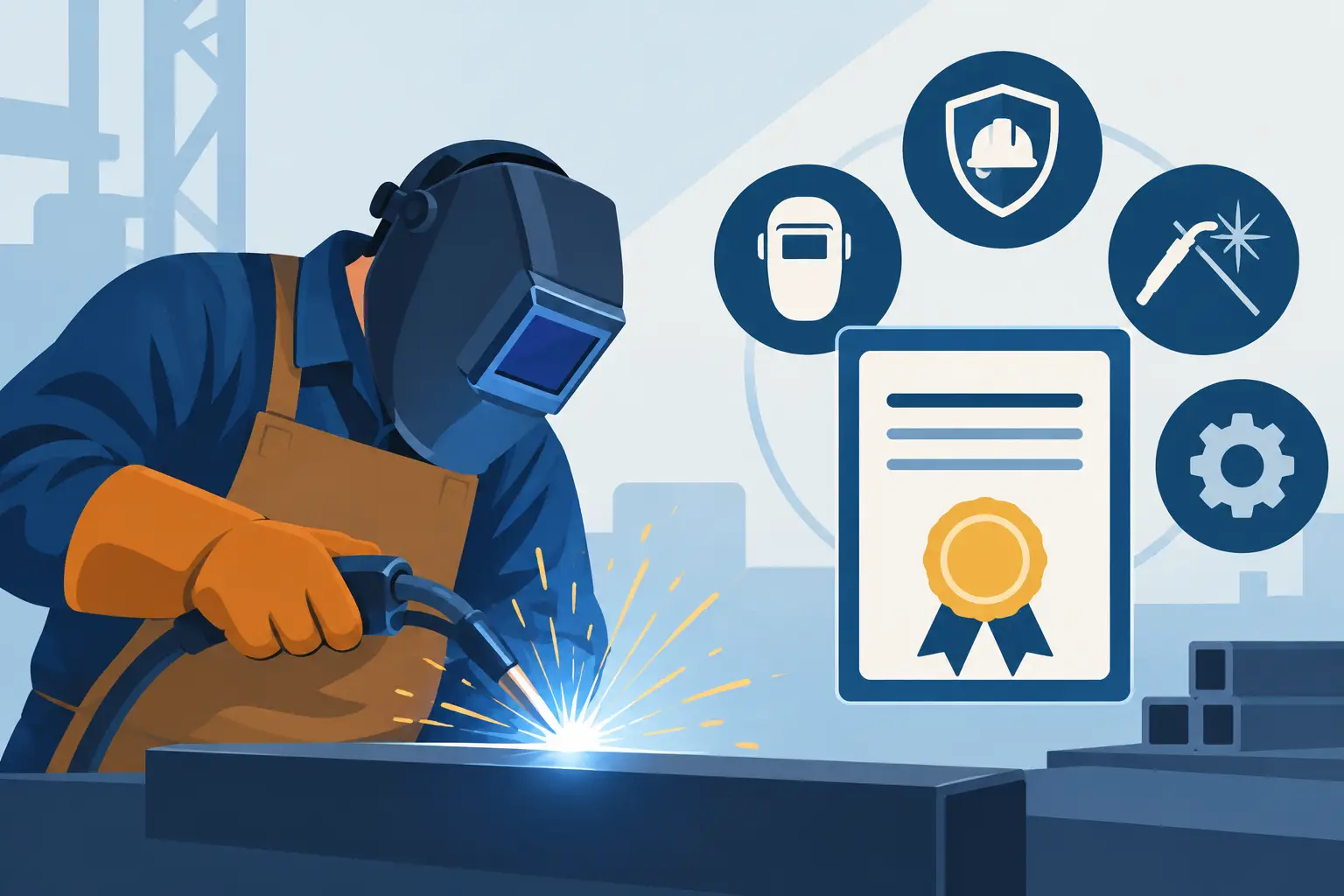
In the field, people often use “certified welder” as a catch-all phrase. Technically, a welder qualification usually proves that a person passed a weld test under a defined welding procedure specification, or WPS. The record identifies key variables such as the welding process, base metal, filler metal, thickness range, joint type, and welding position.
That detail matters. A welder qualified for flux-cored structural plate work is not automatically qualified for TIG pipe welding in the 6G position. A strong hiring decision looks beyond the word “certified” and checks whether the qualification fits the actual scope of work.
Some credentials certify the welder’s hands-on performance. Others, such as inspector certifications, validate technical knowledge and quality-control capability. Both can strengthen a career, but they serve different roles.
7 Best Certifications for Welders by Career Path
1. AWS Certified Welder
For many welders, the American Welding Society Certified Welder program is the most recognizable starting point. It is performance-based: you pass a test weld witnessed by an approved facility, and the test is evaluated against an applicable code or specification.
AWS qualifications can support work under common codes used in structural steel, pipelines, pressure vessels, and other fabrication environments. The value is employer recognition. A hiring manager can see a documented test history instead of relying solely on a resume claim.
The trade-off is specificity. An AWS certification is only as useful as the procedure and code behind it. Before paying for a test, look at job postings in your area. If local contractors repeatedly need FCAW 3G and 4G structural welders, that test will likely create more opportunities than a qualification unrelated to the work available.
2. AWS D1.1 Structural Steel Qualification
Structural steel work is a major lane for welders in commercial construction, industrial projects, bridges, and fabrication shops. AWS D1.1 is the widely used structural welding code, making qualifications tied to it highly relevant for welders pursuing structural roles.
Common tests include plate welds in 3G and 4G positions using SMAW, FCAW, or GMAW processes. Employers may need a particular process, electrode classification, backing condition, or thickness range, so do not assume one D1.1 test covers every job.
For a worker building a construction-focused profile, clearly listing the code, process, positions, and date tested makes your qualifications easier to assess. For employers, those details reduce the risk of sending someone to a site only to discover they cannot meet the project WPS.
3. ASME Section IX Pipe Welding Qualification
ASME Section IX qualifications are central to pressure-retaining work, including power plants, refineries, process piping, boilers, and pressure vessels. This is a high-value path because the work often demands tight quality standards, detailed documentation, and welders who can perform under demanding conditions.
Pipe welders commonly pursue GTAW, SMAW, or combination-process qualifications. A 6G pipe test is especially respected because the pipe is fixed at a 45-degree angle, requiring the welder to work through changing positions around the joint.
Still, 6G is not a magic ticket. The material matters. Carbon steel, stainless steel, chrome alloys, and other materials can require different experience and procedures. A welder pursuing industrial pipe work should build qualifications around the materials and processes used by target employers, not just chase the toughest-sounding test.
4. API 1104 Pipeline Welding Qualification
Pipeline work operates under its own demands: outdoor conditions, production schedules, safety requirements, and code-driven testing. API 1104 is a key welding code for pipelines and related facilities, so qualifications to an API 1104 procedure can be a strong fit for welders seeking pipeline or midstream projects.
These jobs often value real-world field experience alongside test records. Employers may look for downhill stick welding capability, mechanized process experience, specific pipe diameters, and familiarity with project testing requirements.
Pipeline work can pay well, but travel and project cycles are part of the equation. It is a better fit for welders prepared to go where the work is than for someone who needs steady local shop hours.
5. NCCER Welding Credentials
NCCER offers standardized craft training and assessment credentials used across construction and industrial sectors. Unlike a single weld test tied to a specific WPS, NCCER credentials can demonstrate foundational knowledge, training progress, and craft competency.
This can be particularly useful for entry-level welders, apprentices, and workers moving from a school program into commercial or industrial work. It gives employers a consistent way to assess baseline preparation when a candidate has limited job history.
NCCER should not replace a project-specific performance qualification when the job requires one. It works best as part of a complete profile that includes work history, completed projects, process skills, and current weld test records.
6. AWS Certified Welding Inspector (CWI)
The AWS Certified Welding Inspector credential is not a welder performance certification. It is a career step for experienced welders, foremen, quality professionals, and fabrication leaders who want to inspect welds, interpret code requirements, document compliance, and help manage quality systems.
A CWI can open doors to inspection, quality assurance, supervision, and owner-representative roles. It can also be a strong long-term move for a welder who wants to spend less time under the hood and more time overseeing workmanship and compliance.
It requires serious preparation. Candidates need qualifying work experience and must pass demanding examinations. This is not usually the first credential to pursue, but it is one of the most valuable for advancing beyond production welding.
7. Manufacturer or Industry-Specific Certifications
Some sectors use qualifications that go beyond the most common AWS, ASME, or API pathways. Aerospace, military fabrication, shipbuilding, rail, and specialized manufacturing may require proprietary procedures, customer approvals, or credentials aligned with standards such as AWS D17.1 or NAVSEA requirements.
These certifications can be highly valuable because they signal access to specialized work. They are also less portable. A qualification earned for one manufacturer may not transfer directly to another employer, even when the welding process looks similar.
Pursue this route when you have a clear target industry or employer. It is usually smarter to secure the job opportunity first, then earn the exact qualification the work demands.
How to Choose the Right Welding Certification
Start with the work, not the credential. Search the roles you want and identify recurring requirements: structural plate, stainless TIG, carbon pipe, aluminum MIG, confined-space industrial work, or inspection. Then ask local contractors, union halls, fabrication shops, and training facilities which codes and processes show up most often.
Next, consider how current the qualification is. Many welder qualifications require continuity to remain valid. If you have not used a process for a defined period, you may need to requalify. A credential from several years ago may still show experience, but it may not meet an employer’s active project requirement.
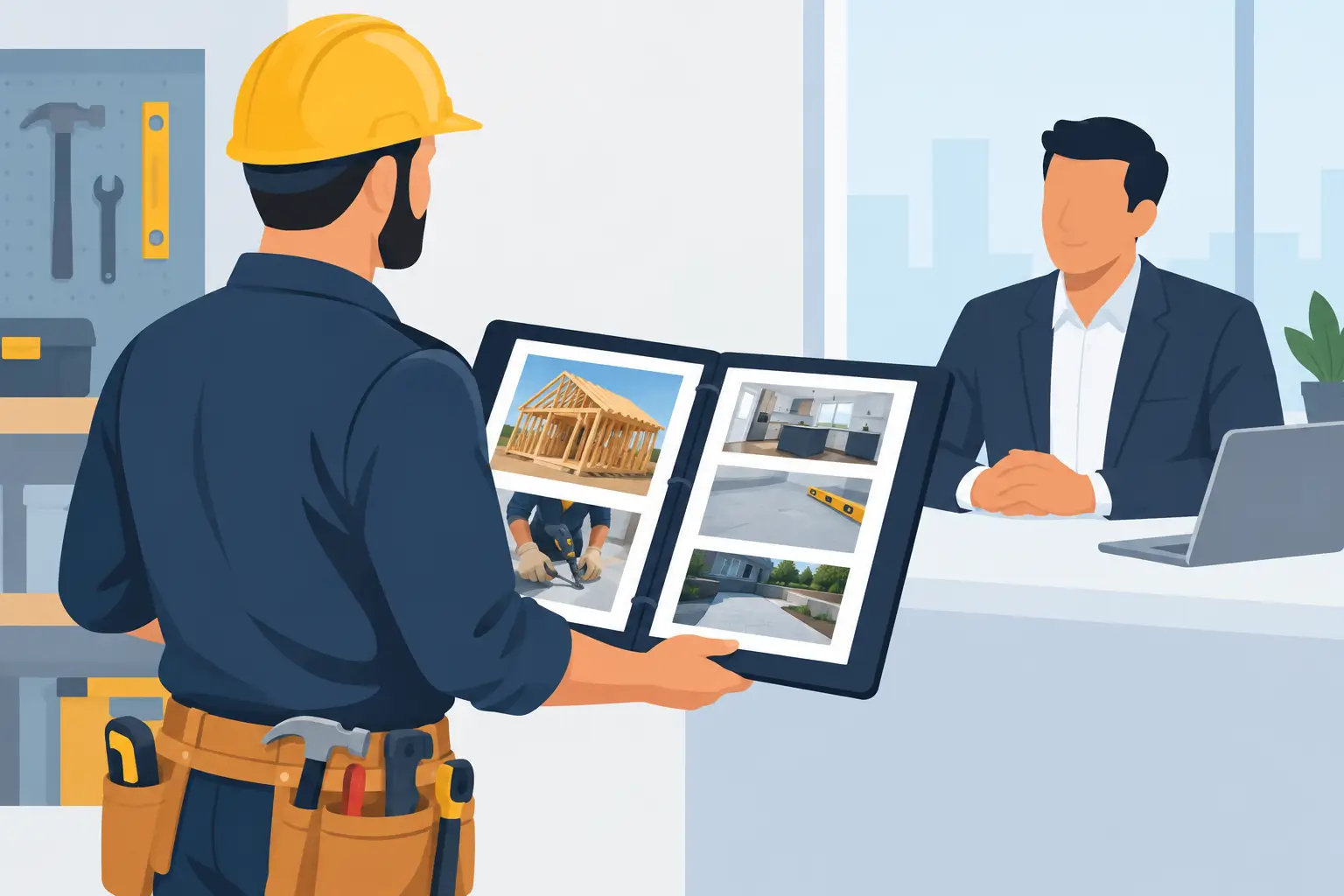
Finally, document everything. Keep copies of test records, continuity logs, safety credentials, work history, and photos of finished projects when permitted. A verified, detailed profile helps employers assess fit before the interview. Platforms built for skilled-trade hiring, including go2work, make that proof easier to present when speed matters.
Credentials That Help but Do Not Replace Weld Tests
OSHA 10 or OSHA 30, forklift training, aerial-lift cards, confined-space training, and first aid/CPR can make a candidate more deployable. They can be especially helpful for construction sites, industrial plants, and turnaround work where safety onboarding affects start dates.
But these are supporting credentials, not welding qualifications. They tell an employer you can meet site expectations. They do not prove you can pass a root weld on pipe or produce code-compliant structural welds. Build both sides of your profile: technical welding proof and jobsite readiness.
The best next certification is the one that moves you toward the work you actually want. Get specific, keep your records current, and make your qualifications easy to verify. That is how a welder becomes easier to hire - and harder to overlook.