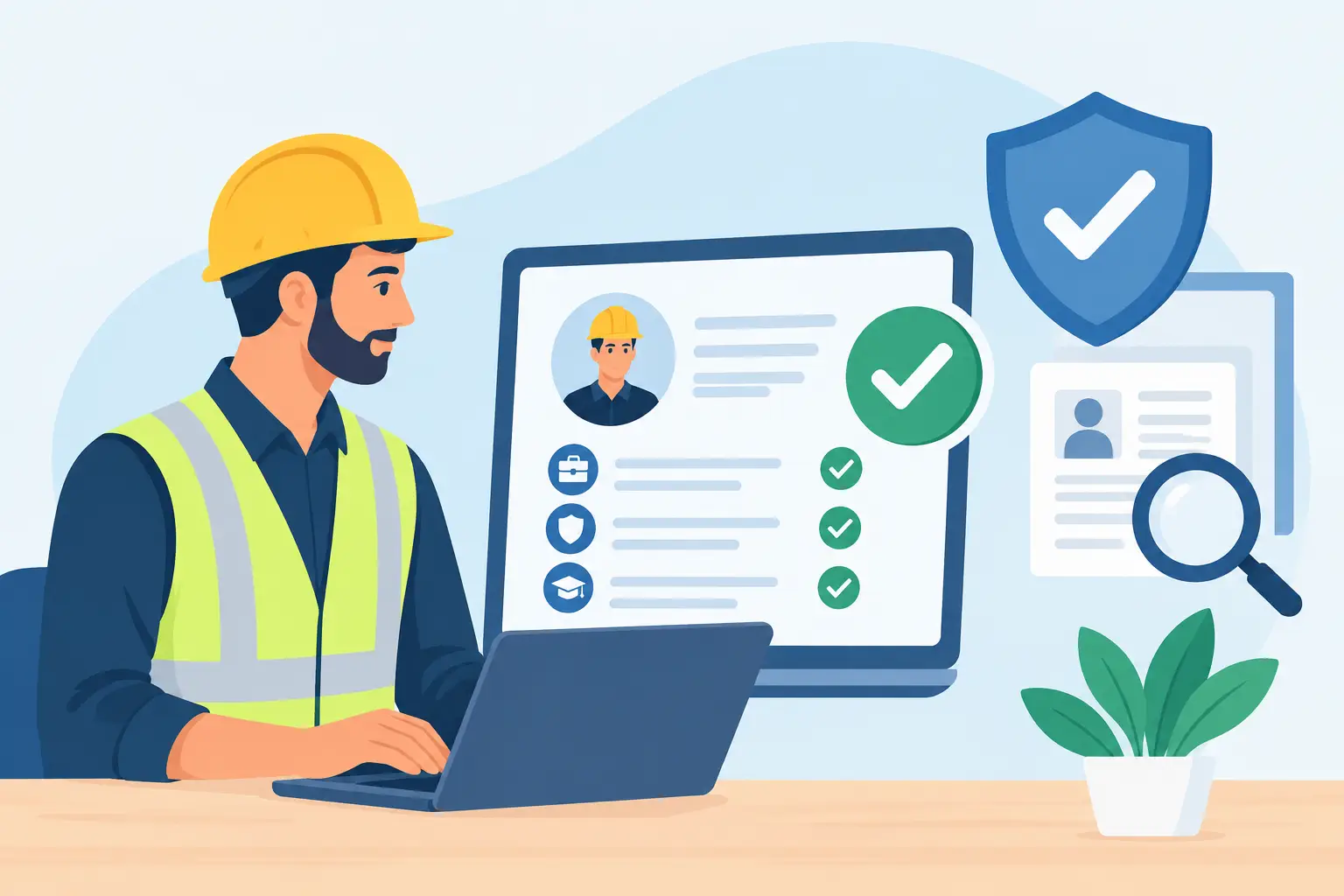

A superintendent needs two licensed electricians for a commercial build by Monday. The usual process - posting broadly, sorting vague resumes, chasing callbacks, and hoping credentials check out - can burn days the project does not have. AI recruiting changes that process by helping construction employers identify relevant, qualified tradespeople sooner, while giving workers a better shot at jobs that match their real experience.
For skilled trades, the value is not automation for its own sake. It is getting dependable people onto active job sites with less guesswork. The best systems combine AI-powered matching with the proof that matters in the field: licenses, employment history, completed projects, availability, location, and direct communication.
What AI recruiting should do in construction
Generic recruiting software often treats a welder, an HVAC technician, and a project coordinator as variations of the same job seeker. Construction hiring does not work that way. A worker may be excellent on tenant improvements but have limited industrial experience. An electrician may hold the right license but lack experience with the specific controls or conduit work required on the project.
Effective AI recruiting reads the details behind a job and a worker profile. It can compare trade, specialization, years of experience, credentials, work history, project portfolio, schedule, and travel radius. Instead of returning a pile of keyword matches, it should surface people who can realistically perform the work.
That makes a meaningful difference when the job is time-sensitive. A contractor filling a last-minute plumbing opening does not need 200 applications. They need a manageable shortlist of plumbers whose credentials, location, and availability align with the assignment.
AI can also reduce the friction that slows both sides down. Employers can create more complete job posts with guidance on missing requirements. Workers can turn project experience into a profile that clearly communicates what they do, where they have worked, and what they are ready to take on next. Better information at the start produces better conversations later.
AI recruiting is matching, not blind selection
There is a line between using technology to prioritize qualified people and allowing a system to make hiring decisions without oversight. In the skilled trades, that line matters.
AI should help an employer narrow the field, flag missing information, and rank likely fits based on the requirements they set. The hiring manager still needs to review a candidate's work history, validate credentials where required, ask job-specific questions, and confirm that the worker is a fit for the crew and site conditions.
A strong match is more than a title. Consider an employer seeking a commercial carpenter for a hospital renovation. The role may require experience with framing, doors and hardware, infection-control practices, early-morning access, and a tight commute radius. A candidate who simply lists carpenter on a resume may not be the right match. A candidate with a verified portfolio of similar work and availability for the project timeline may be.
This is why input quality matters. AI can organize and compare information quickly, but it cannot correct a job post that leaves out the pay range, scope, required license, shift, or location. It also cannot verify a claim unless the platform and employer have a process for validation.
The data that makes a better skilled-trade match
Construction companies get stronger results when job requirements are specific enough to reflect the actual work. Workers benefit when their profiles show evidence, not just broad labels. The most useful recruiting signals usually include:
- Trade and specialization, such as commercial electrical, residential plumbing, TIG welding, or HVAC service
- Licenses, certifications, safety training, and background-check status when relevant to the role
- Project history, including the type of work completed, equipment used, and scale of past jobs
- Location, travel willingness, start date, schedule, and whether the role is temporary, project-based, or permanent
- Employment history, references, ratings, and communication responsiveness
Not every role needs every signal. A short-term helper position may prioritize availability and reliable transportation. A lead HVAC role may place more weight on licensing, diagnostics experience, customer-facing ability, and leadership history. The point is to set priorities intentionally rather than treating every applicant the same.
For workers, portfolios are especially valuable. A clean profile with photos or descriptions of completed projects can show the quality and range of work in a way that a one-line job title cannot. That gives employers more confidence before the first message is sent.
Where AI recruiting can go wrong
Speed is useful only when it does not create expensive mistakes. Employers should be careful about using AI tools that are trained around generic resume language or hidden scoring criteria. A talented tradesperson may describe their experience differently than the system expects. An overly rigid filter can screen out qualified people simply because their profile uses different terms.
There is also a risk in relying on historical hiring patterns. If an employer has consistently hired from a narrow pool, a poorly designed system may repeat that pattern instead of identifying qualified new candidates. The goal should be to assess job-related evidence, not replicate old assumptions.
Human review protects against both problems. Managers should be able to see why someone was recommended, adjust criteria, and contact promising candidates who may not rank first. They should also keep hiring decisions tied to legitimate job requirements and follow applicable employment laws.
Workers deserve transparency, too. They should know what information strengthens their profile and have an opportunity to update licenses, availability, experience, and project examples. A profile is not a permanent judgment. It is a working record that should grow with a career.
A practical AI recruiting workflow for employers
The fastest hiring process still needs a clear operating rhythm. Start by defining the role around the work to be performed, not a copied job description. Include the trade, required skills, job location, pay information where appropriate, schedule, duration, credentials, and target start date.
Next, use AI-powered matching to build a shortlist based on those requirements. Review the top candidates for proof of qualifications, relevant project experience, and availability. If a profile is strong but missing one detail, ask directly rather than assuming the answer.
Then move quickly. Send a message, arrange a short screening call, and confirm the details that matter on site: license status, tools or equipment familiarity, transportation, safety expectations, and start date. The longer an employer waits, the more likely a qualified worker is to accept another opportunity.
Finally, capture feedback after the hire. Did the worker arrive prepared? Did the skills match the profile? Was communication reliable? Those results help improve future matching and build a more trusted hiring marketplace. Platforms such as go2work are designed around this loop, pairing AI-powered matching with verified profiles and direct employer-worker communication.
What skilled workers can do to rank for better jobs
AI does not replace a worker's reputation, but it can make that reputation easier to find. Tradespeople should treat their profile like a job-site introduction: clear, accurate, and backed by work.
List the specific work you perform, not only your trade title. An electrician can note service upgrades, commercial build-outs, panel work, conduit bending, troubleshooting, or low-voltage systems. A welder can identify processes, materials, position certifications, and the kinds of fabrication or field work completed.
Keep licenses and certifications current. Add recent projects, describe the scope, and show what you contributed. Update availability when you are ready for work. These details make it easier for an employer to see whether an opportunity fits before either side wastes time.
Communication still matters after the match. Respond promptly, ask practical questions about the site and schedule, and be honest about what you can take on. The goal is not to appear in every search. It is to be considered for jobs where you can do strong work and build a better track record.
The best use of AI recruiting is simple: let technology handle the search faster, then let verified skills, clear expectations, and professional follow-through get the right people to work.