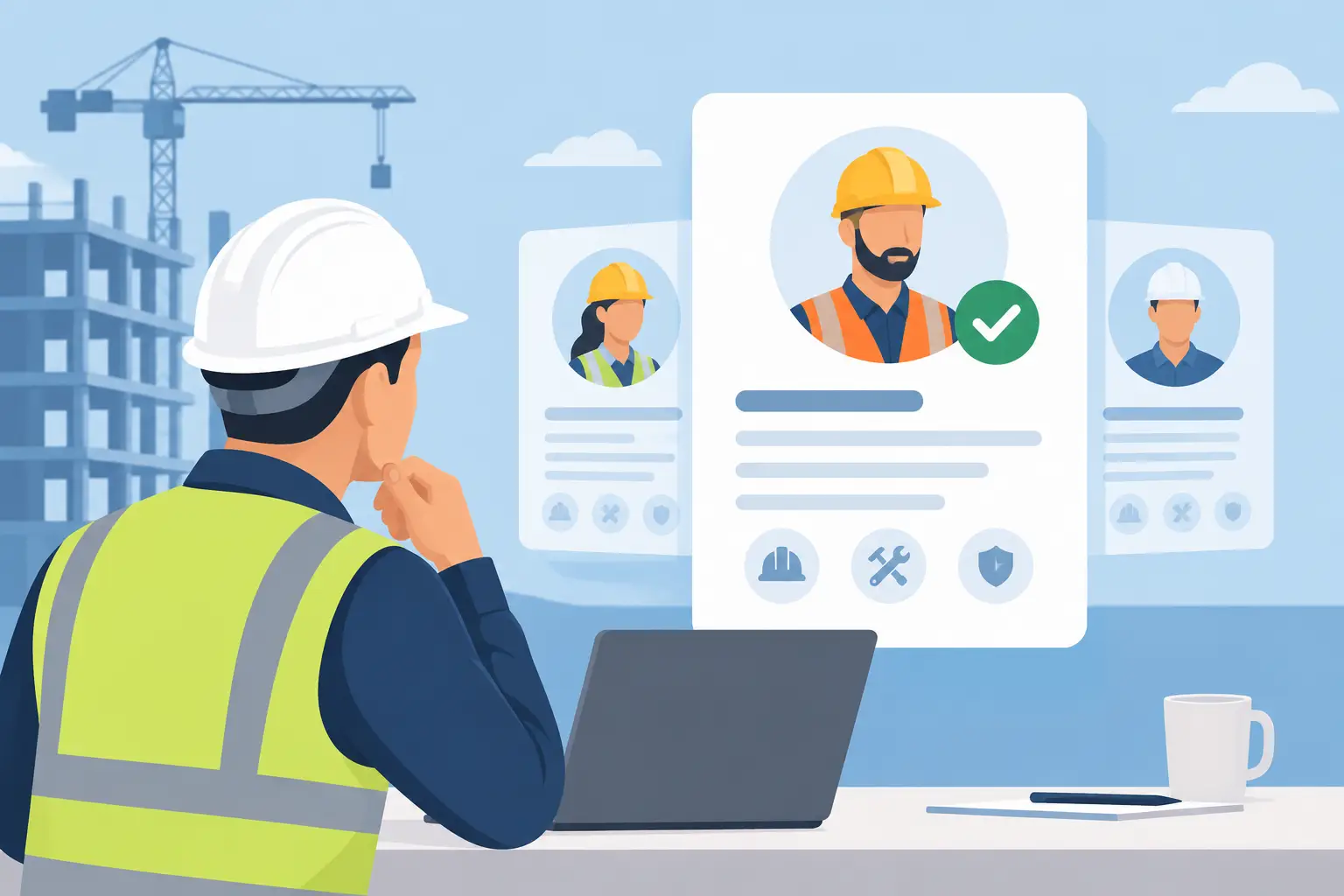
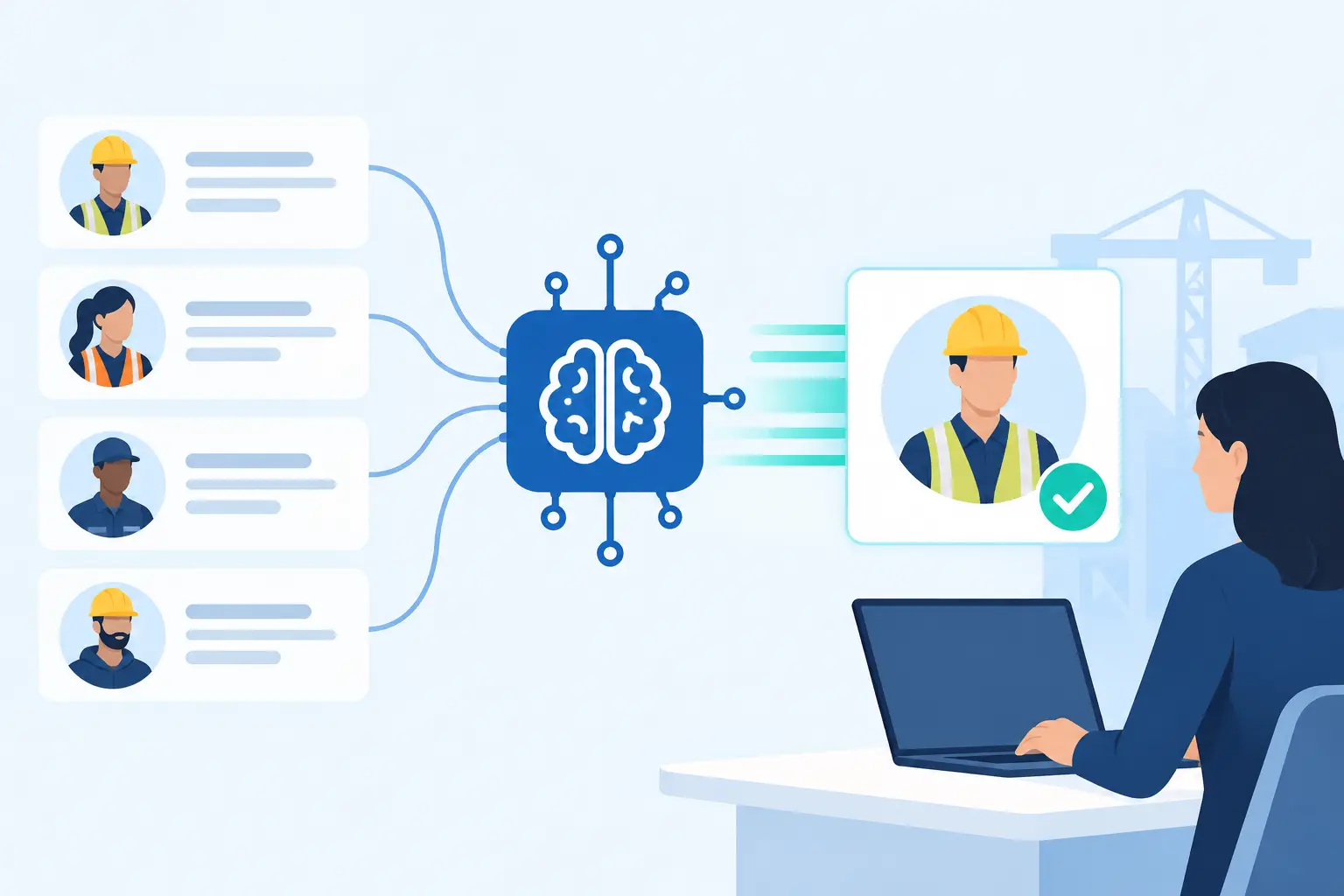
A superintendent needs two journeyman electricians before rough-in starts Monday. A generic job board can return hundreds of resumes, many from people who are unavailable, unlicensed, too far from the site, or not qualified for the work. AI matching results are designed to narrow that gap fast by putting the most relevant trade professionals and job opportunities in front of the right people.
For construction hiring, relevance is not a keyword match. It is proof that a worker has the right trade, experience level, credentials, location, availability, and project background for the job at hand. When matching gets those details right, employers spend less time sorting and more time moving qualified people into interviews, crews, and active projects.
What AI Matching Results Should Actually Measure
AI can process more candidate and job data than a recruiter can review manually in the first pass. But better speed only matters when the matching criteria reflect how field hiring works.
A useful match starts with the non-negotiables. For an employer, that may include a required license, certification, union status, years in a specific trade, ability to travel, and a defined start date. For a tradesperson, it may mean pay range, commute distance, shift, project type, employment type, and whether the role fits their current skill level.
Then come the details that separate an acceptable candidate from a strong one. A commercial plumber with experience in hospitals is not automatically the best match for a residential service role. A welder certified for structural work may be a stronger fit for a fabrication project than someone whose background is primarily ornamental metal. AI-powered matching can recognize those distinctions when profiles and job posts contain clear, verified information.
The goal is not to remove human judgment. It is to make that judgment faster and better informed. Project managers still need to assess communication, crew fit, safety mindset, and the specifics of each project. Matching helps them begin with a shortlist worth reviewing.
Why Construction Hiring Needs More Than Resume Keywords
Resumes are often incomplete, outdated, or written in different formats. In the trades, they also leave out the evidence employers want most: the kinds of projects completed, equipment used, credentials held, and quality of finished work.
A strong matching system looks beyond job titles. “Carpenter” can mean framing, finish work, concrete forms, cabinetry, restoration, or commercial interiors. “HVAC technician” may cover installation, refrigeration, controls, maintenance, or emergency service. Matching results improve when the platform understands the difference between broad trade labels and the skills needed for a specific opening.
Verification matters here as much as technology. A profile that includes validated licenses, employment history, background checks where appropriate, ratings, and a project portfolio gives employers more confidence than an unverified claim. It also helps qualified workers stand apart from applicants who may use the right words without having the field experience to back them up.
That is why go2work focuses on the practical signals trade employers use to make hiring decisions. The best result is not simply a candidate who appears first. It is a candidate an employer can contact with confidence.
The data workers provide changes the quality of the match
Tradespeople have a direct role in the quality of the jobs they see. An incomplete profile creates incomplete matching signals. If a worker lists only “electrician,” they may receive broad opportunities that do not reflect their actual strengths.
A more useful profile identifies license status, specialties, years of experience, service area, willingness to travel, preferred work type, and availability. Adding completed projects and photos of permitted work, finished installs, welds, cabinetry, masonry, or other portfolio-ready results can add the context a job title cannot provide.
This does not mean workers should overstate their experience. Accurate detail produces better opportunities than inflated claims. A worker who is clear about being an apprentice, helper, lead installer, or journeyman is more likely to connect with employers hiring for that exact level.
How Employers Get Better AI Matching Results
The quality of a match begins before the search results appear. A vague post attracts vague applications. A specific post creates a clearer path to qualified talent.
Start by defining the work, not just the title. Instead of posting for a “welder,” state whether the project needs MIG, TIG, stick, pipe, structural, shop, or field welding experience. Explain whether the work is short-term project staffing, a permanent role, overtime coverage, or a traveling assignment. Include the location, expected schedule, start date, pay range when available, and required credentials.
Be honest about the must-haves. If a valid driver’s license, OSHA training, local license, drug screening, or background check is required, say so early. This prevents wasted conversations and helps matching prioritize workers who can meet site requirements.
Employers should also separate essential qualifications from preferences. If five years of commercial experience is required because of the project scope, make it a requirement. If experience with a particular brand of equipment is helpful but trainable, treat it as a preference. Overloading a post with every possible preference can hide capable candidates who meet the real needs of the job.
Review the reason behind the recommendation
A match score or ranked list should support a hiring decision, not make it blindly. Review the profile evidence behind each recommendation: credentials, trade specialty, past employers, project portfolio, work location, and availability.
A candidate who ranks slightly below the top may be the better hire if they can start immediately, live near the jobsite, or have experience on a nearly identical project. Conversely, a highly ranked worker may be unavailable until after the deadline. AI matching is strongest when it combines structured data with real-time communication.
Fast follow-up matters. Skilled tradespeople are often evaluating multiple opportunities at once. When a promising match appears, message quickly, clarify project details, and set expectations for the next step. A delayed response can turn a great match into a missed hire.
What Better Matching Means for Tradespeople
For workers, a good match does more than deliver another job alert. It puts opportunities in front of them that make sense for their experience and career direction.
A finish carpenter should not have to sift through unrelated laborer jobs to find commercial millwork openings. An HVAC technician focused on service should be able to see roles that value troubleshooting and customer-facing experience. A mason looking for steady work should be able to compare local project opportunities without guessing whether their skills fit.
The trade-off is that more precise matching requires workers to keep their information current. Update availability after finishing a project. Add a new certification when it is earned. Refresh work history when responsibilities increase. If you are open to travel, night shifts, or temporary assignments, indicate that clearly. Those details can expand the opportunities that fit without sending irrelevant ones.
Workers should also evaluate employers with the same care. A job may match your skill set but still fall short on commute, schedule, pay, project duration, or advancement potential. The right opportunity is a practical fit for both sides, not just a strong score on a screen.
Where AI Matching Has Limits
No matching system can see everything that matters on a jobsite. Crew dynamics, a worker’s reliability under pressure, a contractor’s management style, and the exact conditions of a project often emerge through direct conversation and references.
AI can also be limited by missing or inaccurate information. If an employer posts a rushed, unclear job description, or a worker leaves credentials and availability blank, the results may be less useful. That is not a failure of technology alone. Matching quality depends on the quality of the inputs.
Use the results as a high-value starting point. Verify licenses and requirements where needed. Ask targeted questions. Review project work. Confirm availability before making promises to a client or crew. This process protects employers from rushed decisions and gives workers a fair chance to show what they can do.
The strongest hiring outcome is simple: the right person arrives ready for the work, the project stays moving, and both sides want to work together again. Keep profiles and job details current, and let better matching turn urgent staffing needs into confident next steps.