
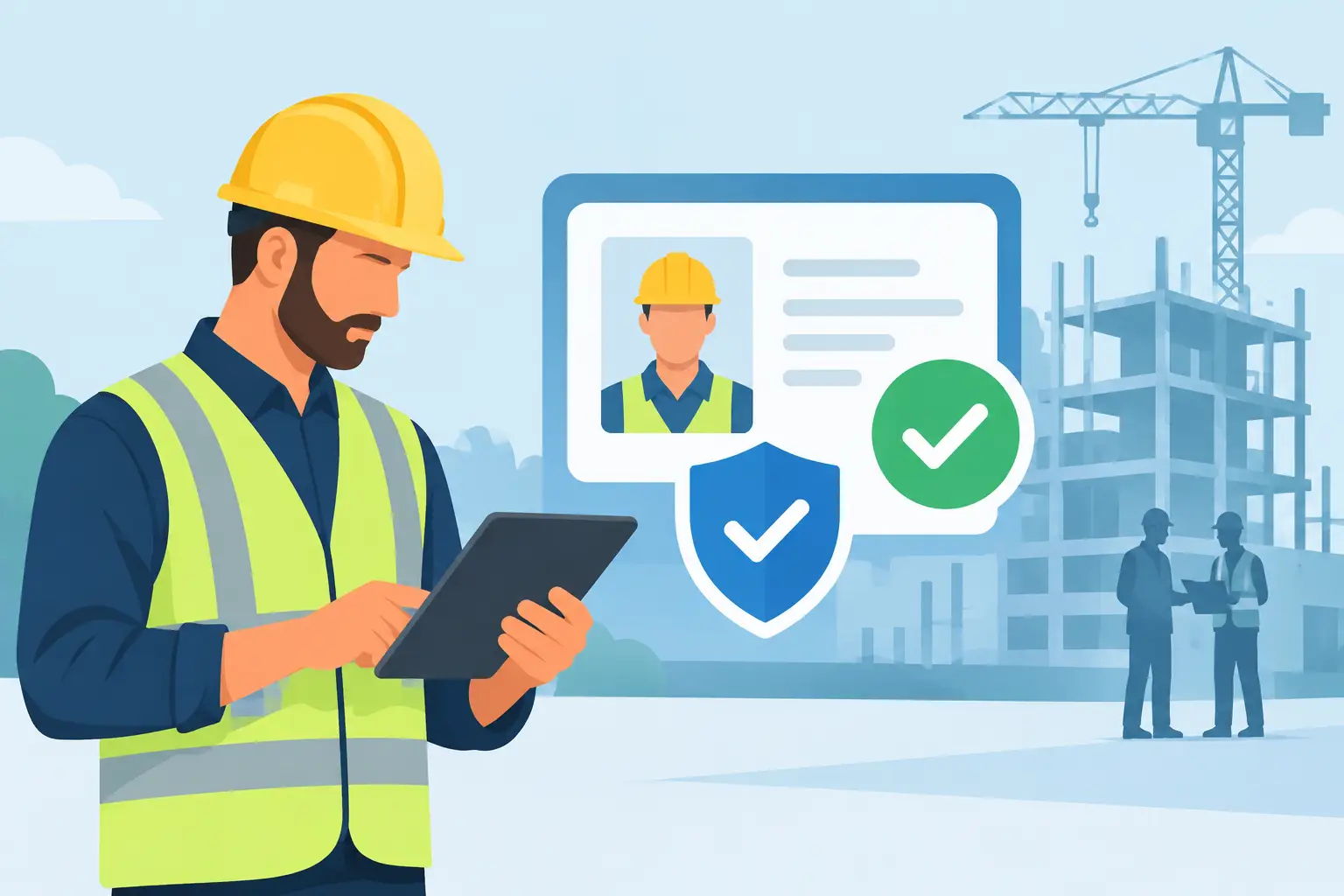
A project can lose days because one hire looked qualified on paper but could not show a current license, verify recent experience, or respond when the superintendent needed an answer. That is why a worker verification software review should go beyond a feature checklist. For construction employers, verification has to produce a clear hiring decision before the schedule slips.
The right platform helps you confirm who a worker is, what trade work they have completed, whether their credentials match the job, and how quickly they can be reached. The wrong platform creates more tabs, more follow-ups, and more uncertainty for a team already managing crews, materials, inspections, and deadlines.
What worker verification software should prove
Generic recruiting tools often treat verification as a background check added near the end of the process. That approach can work for office roles. It is less effective when you need a licensed electrician for a commercial buildout next week or a welder with relevant site experience for an active project.
Construction hiring requires evidence that is specific to the role. A verified worker profile should give employers a usable picture of the candidate, not just a green checkmark. Start with identity verification and contact information. If you cannot confidently reach the person who applied, every other detail becomes harder to trust.
Next, look at licenses and certifications. The platform should make it clear what has been validated, when it was validated, and whether the credential is relevant to the work being staffed. A license alone does not guarantee a fit, but it is a necessary starting point for regulated trades and specialized jobs.
Employment history matters for the same reason. A candidate who has spent years on residential plumbing may be capable, but may not be the right immediate fit for a large commercial or industrial scope. The best systems let employers see trade experience in context: role, project type, duration, skills used, and, where available, employer verification.
Project portfolios add another layer of proof. Photos, completed-work descriptions, and documented skills can help a hiring manager evaluate craftsmanship before setting up a call. They are especially valuable for carpenters, masons, HVAC technicians, finish trades, and other roles where quality shows up in the work itself.
Worker verification software review: the criteria that matter
A useful review should measure whether software reduces hiring risk without slowing down the crew. These are the areas that deserve the most attention.
Verification depth
Ask what the platform actually verifies. Some systems only confirm an email address or collect self-reported information. Others support identity checks, license validation, employment verification, background checks, and ratings from past employers.
More verification is not automatically better if it is unclear or outdated. You need transparency. Employers should be able to distinguish between a self-entered skill, a platform-verified credential, and a reference or rating. That visibility helps teams apply the right level of screening for each role.
Trade-specific relevance
Software built for broad hiring markets can create friction for field teams. If job categories, profile fields, and matching logic are designed around corporate job titles, a foreman may spend too much time translating real requirements into generic filters.
Trade-focused verification should account for licenses, certifications, safety credentials, project experience, availability, location, and specialty skills. A plumber is not interchangeable with a pipefitter, and an HVAC installer is not necessarily qualified for every service or controls role. Details matter because the work matters.
Speed from posting to contact
Verification is valuable only if it supports fast action. Review how long it takes to post a job, identify qualified candidates, and begin a direct conversation. If a platform requires several manual handoffs before an employer can contact a verified worker, it may not help when staffing needs change overnight.
Mobile communication is a practical advantage here. Skilled tradespeople are often on jobsites, in transit, or between shifts. Messaging that works well on a phone can shorten the distance between a job posting and a real conversation.
Evidence beyond a resume
Resumes are often incomplete in the trades. Many strong workers built their experience across subcontractors, short-term projects, referrals, and independent work. Software should give them more than a narrow employment-history form.
Look for profiles that allow workers to show completed projects, skills, credentials, work preferences, and professional ratings. This gives employers more ways to identify a capable candidate and gives workers a fairer way to present their value.
Screening control and privacy
Employers need screening options, but workers also need to understand what is being checked and why. Review whether the platform supports role-appropriate screening and clear consent practices. A background check may be appropriate for a particular site, customer requirement, or position. It should not become a vague substitute for evaluating trade capability.
The best process separates verified facts from hiring judgment. Verification confirms evidence. Your team still decides whether the worker fits the project, crew, pay range, schedule, and safety expectations.
How to test a platform before your next hire
Do not evaluate worker verification software from a sales demo alone. Run a real hiring workflow with an open or upcoming position. Choose a role that is difficult enough to expose weak matching, such as a licensed commercial electrician, experienced welder, or HVAC technician with specific equipment experience.
First, create the job post. Measure how easily you can state the location, scope, required credentials, pay expectations, schedule, and start date. If the posting process forces you to leave out details that affect fit, the candidate pool will be less useful from the start.
Then review the first group of applicants or matched workers. Can you quickly see which credentials are verified? Can you compare relevant project experience without opening multiple records? Are worker profiles complete enough to decide who deserves a call?
Finally, test communication and follow-through. Send messages, ask for missing information, and track response times. A platform may have strong verification features but still underperform if qualified workers are hard to reach or the process stalls after an initial match.
For a more disciplined evaluation, score each option on four operational questions:
- Can our team verify identity, licenses, and experience at the level this role requires?
- Can we see proof of trade skill beyond a basic resume?
- Can qualified workers be matched and contacted quickly from a phone or jobsite?
- Can workers understand how to complete their profiles and present their credentials?
If a platform cannot answer these questions well, it may add administration without improving hiring confidence.
The trade-off between speed and certainty
Every construction employer wants faster hires and fewer bad fits. Those goals can pull in different directions. A deep screening process takes time, while an urgent staffing need demands action. The solution is not to verify less. It is to apply the right verification at the right stage.
For a short-notice labor need, you may prioritize verified identity, trade experience, availability, and direct references. For a long-term role, public project, sensitive site, or regulated position, you may require additional license validation, background screening, and more detailed documentation.
Software should make that decision easier rather than forcing every job through the same process. Flexible verification standards help operations leaders move quickly without treating all roles as equal risk.
Workers benefit from this approach, too. A tradesperson who keeps licenses current, documents projects, and maintains a complete profile should not have to start from zero every time they apply. Verified information gives qualified people a stronger position and helps them get considered for better opportunities.
Where a specialized platform changes the outcome
A platform designed around skilled trades can connect verification to the actual hiring workflow. Instead of separating job posting, candidate search, credential review, and messaging across different systems, employers can work from a single candidate record built for field hiring.
go2work is designed around that reality, combining verified worker profiles, license and employment validation, project portfolios, AI-powered matching, and direct communication. The goal is straightforward: help employers find dependable trade talent faster while giving workers a professional way to prove what they can do.
That specialization matters most when the job cannot wait for a generic applicant pipeline to sort itself out. A verified profile with the right evidence can move a worker from unknown applicant to credible candidate quickly, giving project teams more confidence before they commit.
The next hire should not depend on guesswork, scattered documents, or an inbox full of unanswered applications. Choose verification software that reflects how construction work is staffed: by proven skill, current credentials, real availability, and fast communication. When the proof is easy to see, the right worker has a better chance of getting on site when the work needs to start.