
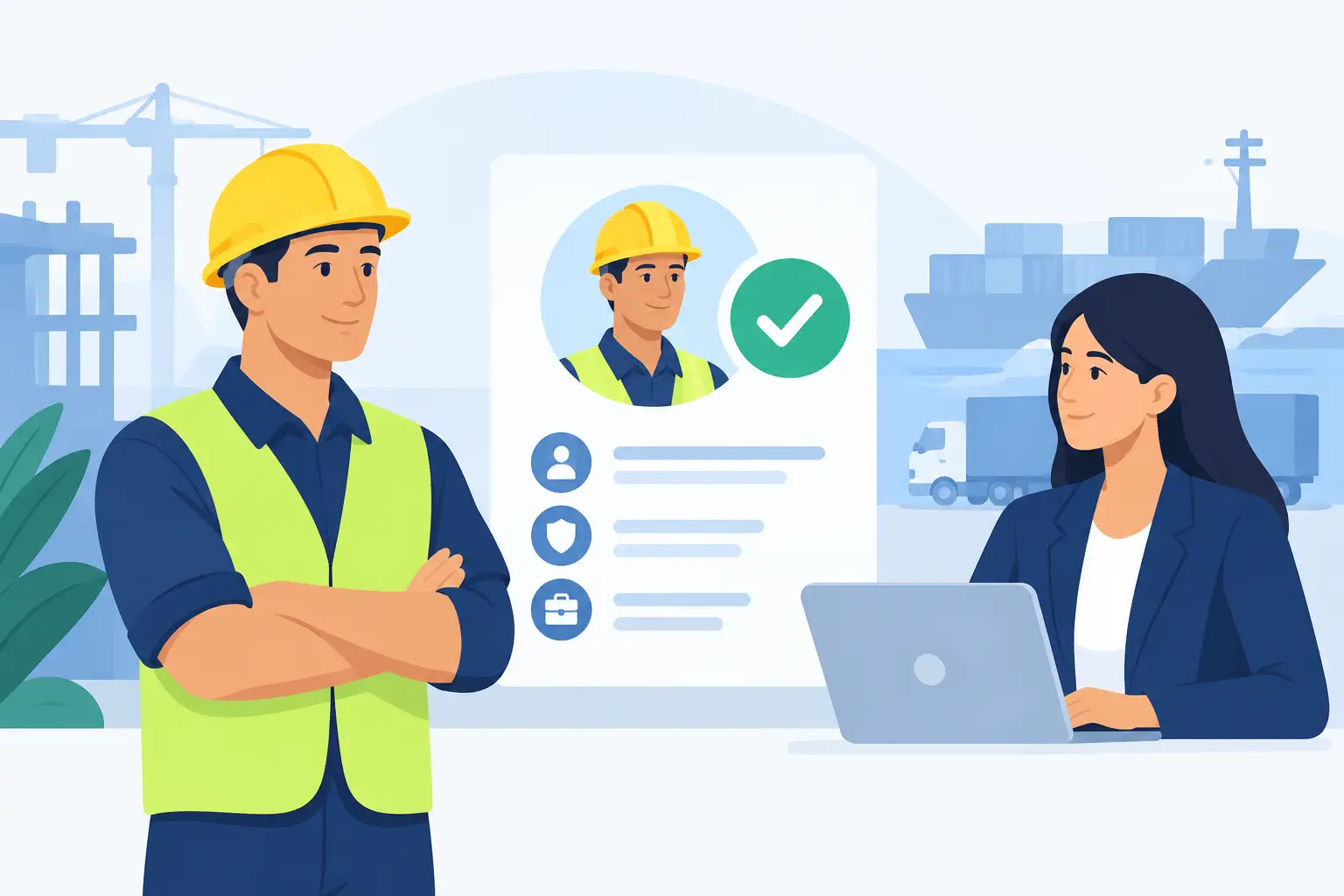
A foreman cannot afford to find out on the first day of a commercial build that a new hire’s license is expired, their experience was overstated, or they cannot perform the work assigned. Worker verification gives construction employers a clearer view of who is walking onto the jobsite before schedules, safety, and production are put at risk.
For skilled tradespeople, verification works both ways. It turns experience, credentials, and completed work into proof that employers can evaluate quickly. Instead of relying on a thin resume or a rushed phone call, a verified profile helps a qualified electrician, plumber, welder, or carpenter stand out for the right reasons.
Why construction hiring needs proof, not assumptions
Construction hiring moves fast because projects move fast. A subcontractor may need additional journeymen before a concrete pour, a service company may need an HVAC technician ahead of peak season, or a general contractor may need a dependable crew for a new phase of work. Speed matters, but hiring without verification can create expensive problems that do not show up until the crew is already on site.
The consequences go beyond a bad fit. Missing or expired licenses can affect compliance. Misrepresented experience can slow a crew down. Unclear work history makes it harder to assess reliability. In safety-sensitive roles, an incomplete background check or failure to confirm required certifications can expose the company, its employees, and the project.
A resume alone rarely settles those questions. Trades work is practical. Employers need evidence that connects a person to a real skill set, a valid credential, and a track record of showing up and delivering quality work.
What worker verification should prove
Effective worker verification is not one check performed once. It is a practical process that confirms the information most relevant to the role, project, and local requirements. A residential remodeling company hiring a finish carpenter will assess different details than an industrial contractor staffing certified welders.
At a minimum, construction employers should verify four areas:
- Identity and work eligibility: Confirm the person is who they say they are and can legally work in the role.
- Licenses and certifications: Check that trade licenses, safety cards, and role-specific credentials are current and appropriate for the job.
- Employment and experience: Validate prior roles, years in the trade, responsibilities, and the types of projects completed.
- Background information: Use lawful, role-relevant screening procedures that support jobsite safety and company policy.
The point is not to create needless paperwork. The point is to replace uncertainty with usable hiring information. If a worker claims commercial electrical experience, an employer should be able to see whether that claim is supported by work history, credentials, project examples, and references where appropriate.
Verification should match the job
More screening is not automatically better screening. The right level of verification depends on the work being performed, the jurisdiction, client requirements, and the level of supervision available.
For example, a company hiring a general laborer for a short-term cleanup assignment may prioritize identity, availability, and prior site experience. A company hiring a licensed plumber to lead a healthcare project needs deeper confirmation of licensure, code knowledge, leadership background, and relevant project history.
This role-based approach keeps the process efficient. It also helps employers avoid collecting information that is not needed for a legitimate hiring decision.
The business case: fewer surprises on the jobsite
When a project is under pressure, every unverified hire adds another unknown. Can this person operate independently? Do they have the required card or license? Have they worked in this environment before? Will their skill level match the rate, scope, and crew expectations?
Verification reduces the number of those questions left unanswered. It helps hiring managers build a more accurate shortlist, gives project leaders better visibility before onboarding, and makes conversations with candidates more productive. Instead of spending the first week discovering gaps, teams can focus on assigning work and keeping production on track.
There is a trade-off. Thorough checks take time, and manual verification can become a bottleneck when a company needs to fill multiple roles quickly. The answer is not to skip verification. It is to standardize the process, use clear requirements for each role, and keep verified information organized so it can be reviewed without repeated back-and-forth.
For employers, that means faster decisions with fewer blind spots. For workers, it means less time re-explaining their qualifications every time they pursue a new opportunity.
How verified profiles improve hiring decisions
A verified worker profile should do more than display a badge. It should give employers enough context to make a sound first decision: whether to start a conversation, schedule an interview, or move a candidate forward for a specific project.
The strongest profiles combine credential validation with practical evidence. A license tells an employer that a requirement has been met. A portfolio can show the quality and scope of work. Employment history provides context around crew size, project types, and responsibilities. Ratings or employer feedback can add another signal about reliability and professionalism.
Each signal has limits. A great portfolio does not replace a required license. A current license does not prove a person is the best fit for a specialized project. Employment dates do not always reveal the quality of someone’s work. Hiring teams get better results when they consider the full picture rather than treating any one data point as a guarantee.
That is where a trade-focused platform can make a difference. go2work brings verified profiles, license and employment validation, project portfolios, and direct communication into a hiring process built around field-based work. Employers can spend less time sorting through generic applications and more time assessing tradespeople against the actual demands of the job.
A practical verification workflow for employers
Start before the job post goes live. Define the non-negotiables for the role: trade, experience level, license requirements, certifications, location, shift, pay range, and project duration. If the requirements are vague, verification will not fix the mismatch later.
Next, review candidates against those requirements in a consistent order. Confirm core credentials first, then look at relevant work history and project evidence. If something is unclear, ask a direct question before moving forward. For example: “Was your commercial HVAC work primarily installation, service, or controls?” A specific question usually produces a more useful answer than “Tell me about your experience.”
Then verify only what matters for the decision at hand. Check license status through the appropriate official source when required. Follow applicable federal, state, and local rules when conducting background checks, including consent, disclosure, and fair hiring obligations. Keep records secure, limit access to people involved in hiring, and avoid making decisions based on information that is not job-related.
Finally, use the interview and onboarding process to confirm the operational details a profile cannot fully capture: start date, tools, transportation, physical requirements, jobsite expectations, and communication style. Verification creates confidence, but clear expectations create retention.
What tradespeople can do to become easier to hire
Qualified workers should treat verification as part of their professional reputation. An outdated profile, missing license number, or vague job history can make a strong candidate look uncertain when an employer is reviewing several applicants quickly.
Keep licenses and certifications current. List the kind of work completed, not just job titles. “Electrician” is broad; “installed conduit, panels, and lighting controls on commercial tenant improvements” gives a hiring manager something concrete to evaluate. Add project photos when permitted, describe your role on the crew, and make sure employment dates and contact information are accurate.
Verification is not about proving perfection. It is about making it easy for an employer to understand what you do well, what you are qualified to do, and why you can be counted on. That clarity can lead to better-fit jobs, stronger pay conversations, and more control over your next move.
The best hire is not simply the first available worker or the candidate with the longest resume. It is the person whose skills, credentials, and experience clearly fit the work ahead. Build your hiring process around that proof, and every new crew member starts with a stronger foundation.