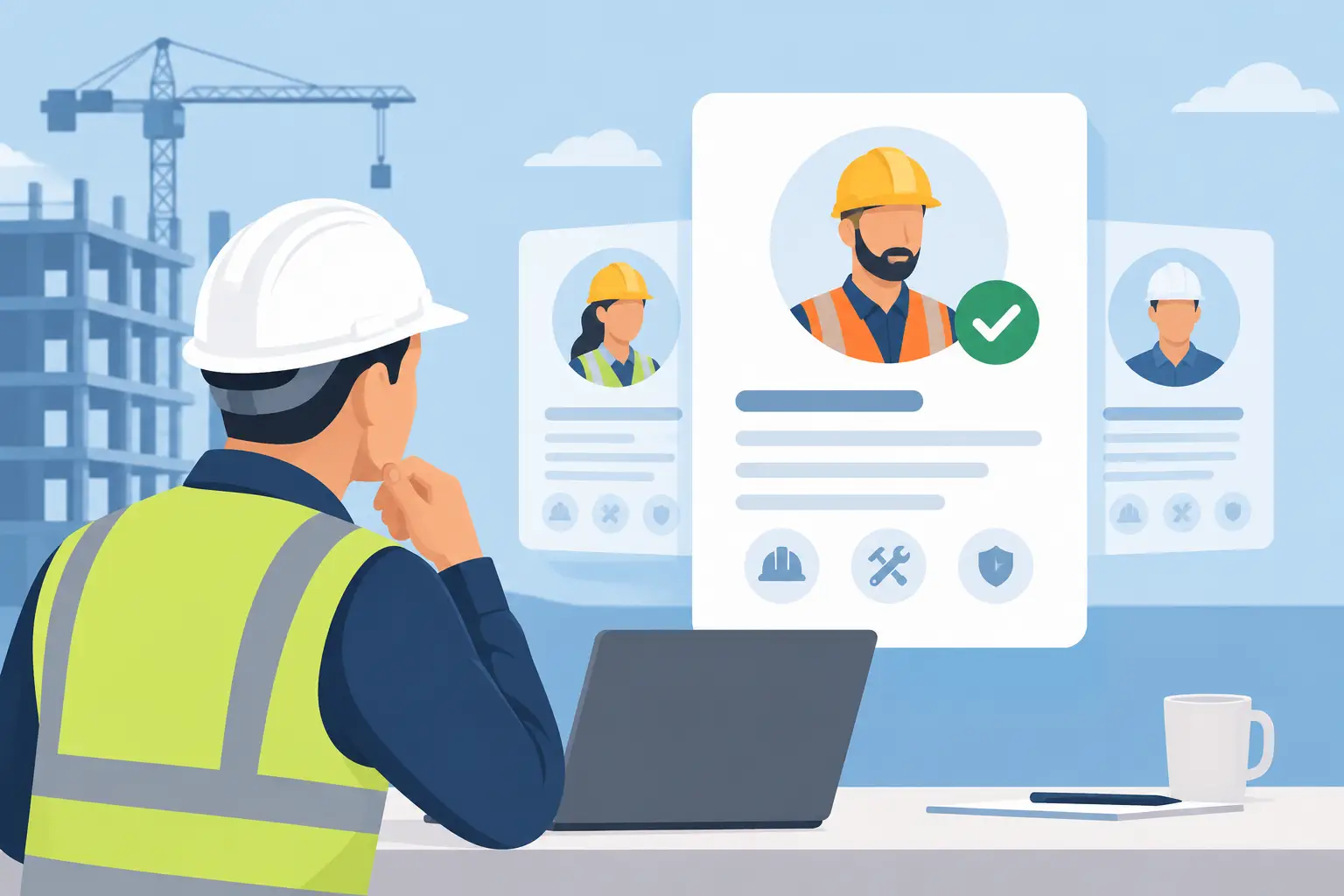

A polished interview can tell you whether a candidate communicates well. It cannot reliably tell you whether an electrician can read a panel schedule, a welder can produce a sound bead, or an HVAC technician can diagnose a real fault under pressure. In skills testing versus interviews, construction employers get better results when they stop treating the two methods as substitutes and start using each for what it can actually prove.
For trade hiring, the cost of guessing is high. A poor hire can slow a crew, create rework, introduce safety risks, and put a project schedule under strain. Candidates feel the downside too: experienced tradespeople often lose opportunities to applicants who interview better but cannot perform at the same level in the field.
The stronger process is not testing alone or interviews alone. It is a practical, role-specific evaluation that verifies ability before the final conversation confirms fit.
Skills Testing Versus Interviews: What Each Measures
Interviews are useful for learning how a person thinks, communicates, and approaches work. A foreman or project manager can ask about jobsite coordination, difficult customers, changing plans, attendance expectations, and how a candidate handles a safety concern. Those answers matter, especially when the role involves leading apprentices, dealing with inspectors, or working directly with clients.
But interviews rely heavily on self-reporting. Candidates can describe projects they barely touched, overstate their role on a crew, or give a confident answer they learned from experience coaching. Even honest workers may struggle to explain a skill they perform instinctively every day. A quiet, highly capable mason should not lose out because another candidate is more comfortable selling themselves across a desk.
Skills testing looks for proof. Depending on the trade and position, that may mean reviewing a portfolio, completing a code-based scenario, identifying errors in a drawing, demonstrating tool knowledge, or performing a short supervised work sample. The right test answers a direct hiring question: Can this person do the work this job requires?
That does not make interviews optional. Technical ability is only one part of a dependable hire. A candidate may be an excellent carpenter but unsuitable for a lead role if they cannot plan work, communicate with other trades, or keep a crew aligned. The decision depends on the role, project complexity, and level of responsibility.
Why Interviews Alone Create Risk on the Jobsite
Most construction hiring teams have seen the gap between a strong interview and a weak first week. The applicant arrived on time, spoke confidently about years of experience, and had the right job titles on a resume. Once assigned to the crew, however, they needed repeated direction, missed basic quality standards, or could not work independently.
That gap often comes from vague hiring signals. “Five years of experience” does not reveal whether someone has worked on commercial tenant improvements, industrial facilities, residential service calls, or new construction. A plumbing candidate may have deep rough-in experience but limited knowledge of finish work. An HVAC technician may excel at installations while lacking advanced troubleshooting skills.
Interviews also leave room for inconsistency. One hiring manager may ask technical questions, another may focus on personality, and a rushed supervisor may make a decision based on availability alone. Without a defined evaluation process, employers can unintentionally favor confidence over competence.
For workers, that system is frustrating. Skilled tradespeople want their completed work, licenses, certifications, and real capabilities to carry weight. They should have a clear way to show what they can do, not just explain it.
When Skills Tests Deliver Better Hiring Signals
A skills test works best when it mirrors a meaningful part of the job without creating an unnecessary obstacle. It should be short, safe, relevant, and scored consistently. The goal is not to trap candidates with obscure questions. It is to confirm the level of skill the employer needs right now.
For an electrician, a test might involve interpreting a simple one-line diagram, identifying safety issues, or walking through a troubleshooting sequence. For a welder, it may include a supervised test piece reviewed against the required process and position. For a carpenter, reviewing a framing plan or completing a measured layout can reveal far more than a general question about experience.
The best assessments are matched to the opening. A small service contractor hiring an apprentice does not need the same test as a commercial contractor hiring a superintendent-level electrician. Test for the work at hand, then assess room to grow.
Use portfolios and credentials before hands-on testing
Not every position needs an on-site work sample. Project photos, verified licenses, certifications, employment history, and references can narrow the field quickly. A portfolio is especially valuable in finish carpentry, masonry, welding, and other trades where workmanship is visible.
Verification also protects everyone involved. Employers can spend less time sorting through unsupported claims, while qualified workers have a more credible way to stand out. Platforms built for the trades, including go2work, make this type of proof easier to organize before the interview stage.
Keep practical tests fair and safe
A test should never become unpaid production labor. If an employer asks for a lengthy demonstration, especially one that creates billable work, compensation is the fair approach. Short assessments should take place under safe conditions, with the necessary equipment, clear instructions, and the same standards for every candidate considered for the role.
Employers should also avoid testing skills that have no bearing on the position. A candidate for a residential plumbing service role should not be judged on commercial plan-reading they will never use. Relevance improves hiring accuracy and creates a better candidate experience.
A Better Process: Proof First, Conversation Second
For most skilled trade roles, a three-part process is both practical and efficient. Start with verification, move to a focused skills check, then use the interview to confirm fit and expectations.
First, review the essentials: license requirements, certifications, work eligibility, relevant project history, portfolio evidence, and availability. This step removes obvious mismatches before a manager spends time on calls.
Next, use a short technical screen. It can be a trade-specific questionnaire, a scenario review, or a supervised work sample for finalists. Give every candidate the same instructions and score against a simple rubric. For example, a welding assessment may evaluate setup, safety practices, process control, and final quality. The rubric keeps feedback grounded in the work rather than a general impression.
Then interview candidates who have demonstrated the needed baseline skill. At this point, the conversation becomes more valuable. Ask how they manage priorities, work with other trades, respond when plans change, and communicate a problem before it becomes a delay. Be clear about pay range, work location, schedule, travel, tools, and project duration. Direct information helps qualified people make faster decisions.
This approach also reduces time-to-hire. Instead of holding long interviews with every applicant, hiring teams can quickly identify people who meet the non-negotiables and reserve deeper conversations for viable candidates.
Questions That Belong in the Interview
Once skill has been established, interview questions should reveal reliability and jobsite judgment. Ask a candidate to describe how they would handle a missing material, a conflict with another trade, or a task that appears unsafe. Ask what information they need before starting unfamiliar work. Their answer can show whether they escalate issues early, protect quality, and respect the chain of command.
For lead roles, ask about planning and coaching. How do they assign work to a mixed-experience crew? How do they check quality without slowing production? How do they keep apprentices learning while meeting the schedule? These are difficult qualities to measure through a hands-on technical test alone.
Candidates should use the interview the same way. Ask what success looks like in the first 30 days, who makes field decisions, what equipment is provided, and how overtime or travel is handled. A job is not a fit simply because the trade and pay rate are right.
The Trade-Off: More Proof Can Add Time
Skills assessments require planning. Someone has to design the test, administer it, and evaluate results. For an urgent crew shortage, that can feel like one more delay.
The answer is not to skip verification. It is to keep the process proportionate. For a short-term helper role, credential checks and a brief supervisor conversation may be enough. For a licensed electrician working on a complex commercial project, a more structured technical screen is worth the time. The more expensive the mistake, the more evidence you should require.
Speed matters in construction hiring, but speed without proof often creates a second hiring cycle. A focused evaluation upfront can prevent weeks of lost productivity later.
The best hiring process gives capable people a chance to show the work behind their experience. When employers combine verified qualifications, relevant skills testing, and direct interviews, they make decisions with less guesswork and build crews that are ready to contribute from day one.