A superintendent cannot pause a concrete pour because a job board sent five resumes with no proof of experience. When an electrician, welder, or HVAC technician is needed on site, the question is not whether there are applicants. It is whether they are qualified, available, and ready to communicate. Recruiting software built for construction has to answer those questions fast.
Generic hiring systems were designed around office roles, long interview cycles, and polished resumes. Skilled trade hiring runs on different signals: licenses, safety requirements, work history, project fit, location, and the ability to show up when the crew needs them. The right system turns those signals into a faster, more reliable hiring decision.
Why Generic Recruiting Tools Fall Short on the Jobsite
Most recruiting platforms can collect applications and track candidates. That is useful, but it is only the beginning for construction employers. A resume may say a candidate has commercial plumbing experience, yet it rarely shows whether they have worked on hospitals, high-rise buildings, tenant improvements, or service calls. It may list a certification without confirming that it is current.
That gap creates expensive follow-up work. Project managers and HR teams spend time sorting through mismatched applicants, requesting documents, chasing responses, and trying to determine whether a worker can handle the scope in front of them. Meanwhile, the project schedule keeps moving.
Construction also has a different communication rhythm. Many strong tradespeople are in the field, not sitting at a desk refreshing email. They need mobile-friendly job details, direct messages, and clear next steps. Employers need to know who has seen the opportunity and who is ready for a call, an interview, or a start date.
Recruiting software for the trades should not force field hiring into a corporate workflow. It should reduce the distance between a labor need and a verified person who can fill it.
What Recruiting Software Should Do for Construction Teams
The best platform is not the one with the longest feature list. It is the one that removes the biggest hiring bottlenecks without creating more administrative work. For construction and skilled trade employers, that starts with candidate quality.
Verify what matters before the interview
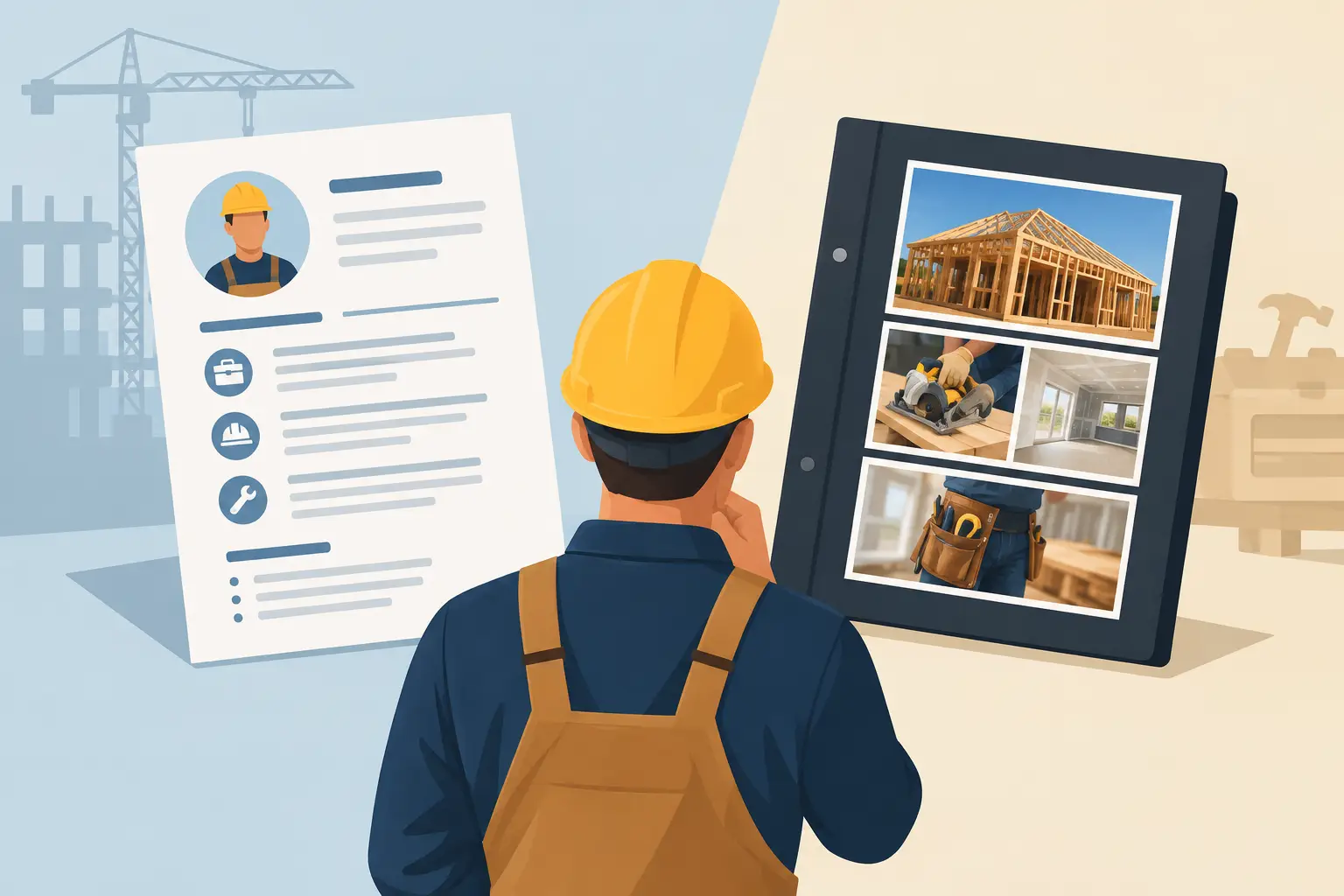
A worker profile should provide more than a job title and a few years of experience. Employers need visibility into trade specialties, licenses, certifications, employment history, background checks when required, and completed work. A portfolio is especially valuable because it puts evidence next to the claim. A carpenter can show finish work. A welder can show the type of projects they have completed. An HVAC technician can demonstrate relevant equipment experience.
Verification does not replace a manager's judgment. It gives that judgment better inputs. A foreman may still want a skills test or a conversation about a specific project condition. But the team should not have to start every candidate review from zero.
Match workers to the actual scope
A broad search for "electrician" often produces the wrong results. A company may need a journeyman with commercial experience, an active license in a specific state, the ability to travel, and availability for a six-week shutdown. Those requirements should be part of the match, not buried in a notes field.
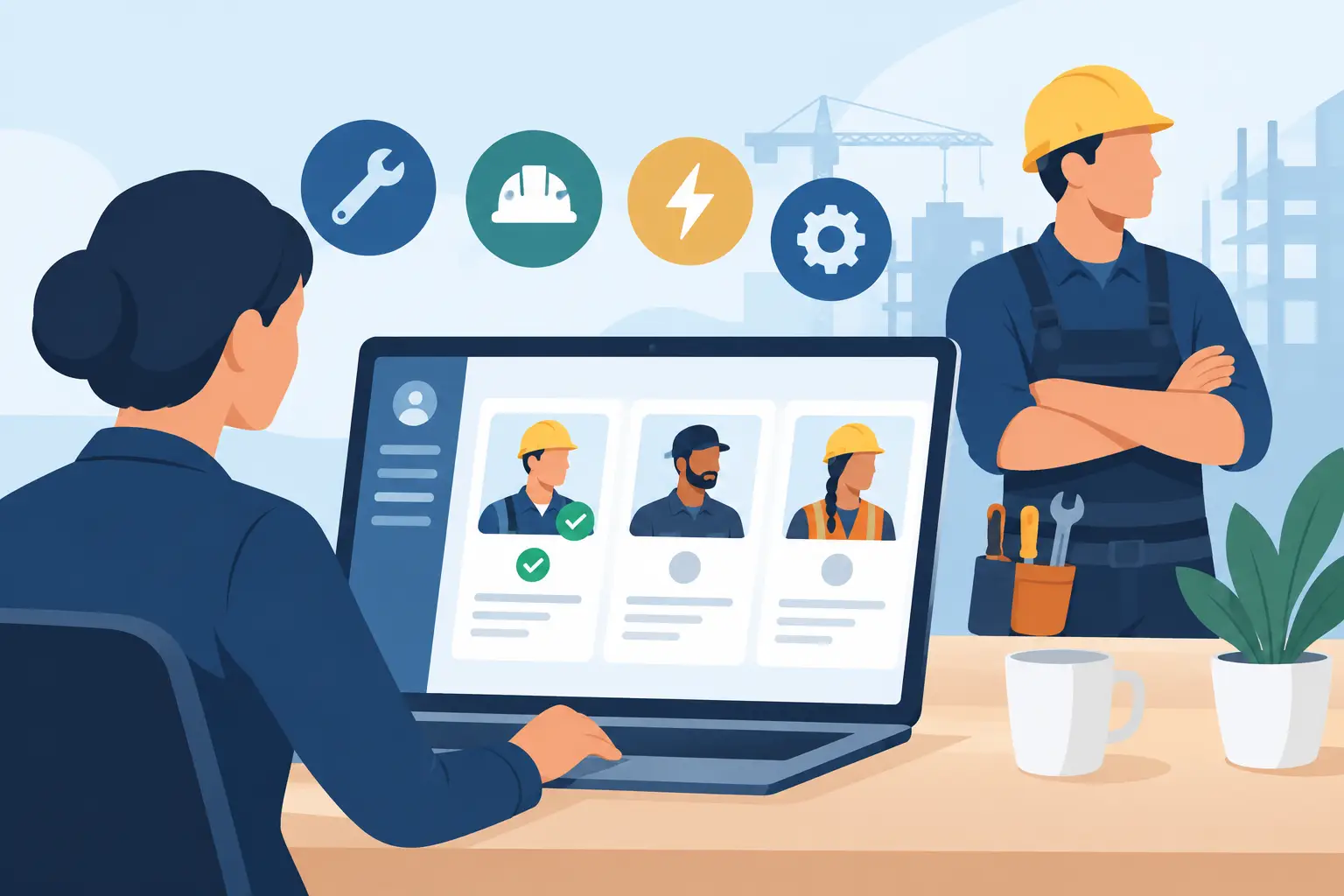
AI-powered matching can help rank workers based on relevant qualifications, location, availability, and project needs. It works best when the underlying data is detailed and verified. AI can speed up the shortlist, but it cannot compensate for vague job posts or incomplete worker profiles.
Keep conversations moving on mobile
Speed is often lost after a promising candidate is identified. Calls go unanswered. Emails sit unread. The candidate takes another offer because the next step was unclear.
Mobile-first messaging keeps the process practical. Employers can ask a quick screening question, confirm availability, share project details, or schedule a call without moving the conversation across several tools. Workers get a direct path to respond while they are between jobs, on a break, or heading home from a site.
The goal is not to rush a bad hire. It is to remove avoidable waiting from a good one.
Build a repeatable talent bench
Hiring should not restart from scratch every time a new project is awarded. Recruiting software should help teams retain strong candidates, past applicants, and workers who may be available for the next phase. That creates a living talent bench instead of a stack of forgotten resumes.
For subcontractors and growing construction firms, this is where hiring becomes more predictable. A project manager can return to known candidates with proven trade experience rather than launching a last-minute search after the schedule is already under pressure.
A Better Hiring Workflow for Skilled Trades
A practical recruiting workflow has fewer handoffs and clearer decisions. Start with a job post that reflects the work, not a generic job description. State the trade, level of experience, location, schedule, pay range when appropriate, core requirements, and the type of project. If travel, overtime, prevailing wage experience, or a specific credential is required, say so up front.
Next, review candidates through proof of skill and job fit. Look at verification status, licenses, portfolio work, ratings, prior experience, and availability. This is where a focused platform provides an advantage over high-volume job boards: fewer irrelevant profiles and more useful information per candidate.
Then move qualified workers into a direct conversation quickly. Confirm the details that can change fast, including start date, transportation, schedule, and interest in the assignment. A candidate who looked ideal three days ago may already be committed elsewhere. Fast follow-up protects your shortlist.
Finally, document the outcome. Mark whether the worker was hired, unavailable, not qualified for the scope, or worth contacting for future work. Those decisions make the next search sharper. Over time, your team learns which sources, qualifications, and profile signals lead to dependable hires.
The Trade-Offs to Consider Before You Choose
Not every construction company needs the same recruiting software. A small residential contractor hiring one apprentice may value simplicity over detailed workflow controls. A regional mechanical contractor staffing several projects at once may need deeper matching, verification, collaboration tools, and a stronger candidate pipeline.
There is also a balance between speed and screening. A platform that lets you contact workers immediately is useful, but only if the profile gives you enough confidence to act. On the other hand, a system with extensive approval steps can slow hiring so much that qualified candidates disappear. Look for a process that verifies the essentials early while keeping the conversation moving.
Candidate supply matters too. The best software is not only an employer dashboard. It must give tradespeople a reason to build complete profiles, display their work, keep credentials current, and respond to opportunities. When workers see real career value, employers get better information and a more active talent pool.
That two-sided model is why a specialized marketplace can outperform a generic applicant tracking system for field hiring. Platforms such as go2work are designed around verified trade profiles, project portfolios, AI-powered matching, and direct communication because those are the details that shape a jobsite hire.
How Employers Can Get Better Results From the Platform
Software cannot fix an unclear hiring plan. Before posting, align the project manager, foreman, and HR team on the non-negotiables. Decide which credentials are mandatory, what experience is preferred, when the worker must start, and who can make the final call. If the team cannot define a successful hire, candidates cannot accurately assess whether they fit.
Be specific without making the post unnecessarily narrow. Requiring a particular certification makes sense when the project demands it. Requiring ten years of experience for a role that a capable five-year technician could perform may shrink the pipeline for no operational gain. Separate true requirements from preferences.
Respond like the labor market is competitive, because it is. Strong tradespeople often have choices. A clear job post, a quick first response, and a straightforward interview process signal that your company is organized and respects their time. That improves acceptance rates before compensation even enters the conversation.
For workers, the same principle applies: treat your profile like a record of work, not a placeholder. Add licenses, document completed projects, keep your availability current, and respond promptly when a relevant employer reaches out. Proof of skill makes it easier to compete for better opportunities than a bare resume ever could.
A full crew starts with one dependable person who has the right skills, knows the scope, and is ready to work. Choose recruiting software that helps your team find that person before the schedule pays the price.