
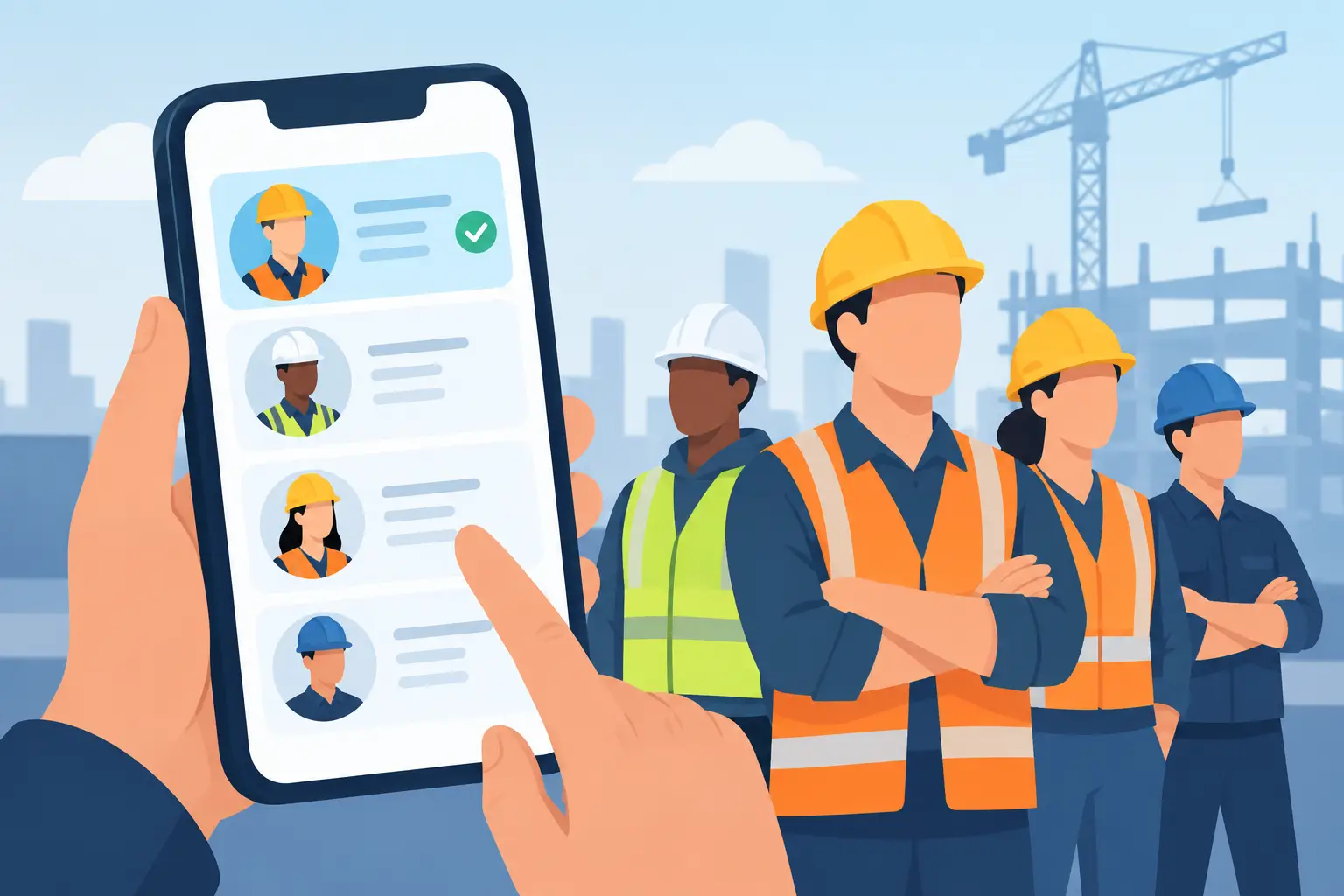
A superintendent gets the call at 6:15 a.m.: two electricians are out, rough-in starts tomorrow, and the schedule has no room to absorb the loss. That is the real test for mobile recruiting for contractors. It is not about adding another hiring channel. It is about finding qualified people, confirming they can do the work, and getting a clear answer before the project takes the hit.
Construction hiring happens in the field, between site walks, deliveries, change orders, and safety meetings. Employers and tradespeople need a process built for that pace. Mobile-first recruiting replaces long email chains and incomplete applications with immediate job visibility, verified profiles, direct communication, and proof of work that can be reviewed from a phone.
Why Mobile Recruiting for Contractors Matters
Traditional recruiting assumes hiring managers sit at a desk and candidates have time to fill out lengthy forms, upload documents, and wait for a response. Skilled trades hiring rarely works that way. A project manager may need a welder for a shutdown next week. A plumber may be comparing opportunities while finishing a service call. Neither side benefits from a slow, office-first process.
Mobile recruiting puts the essential decisions where the work happens. Employers can post an opening, review a candidate's license details, work history, portfolio, ratings, and availability without waiting to get back to the office. Tradespeople can see relevant work, respond quickly, share completed projects, and communicate directly with companies that are actively hiring.
Speed matters, but speed without verification creates expensive problems. Hiring the first person to reply may lead to a missing credential, a skill mismatch, or a no-show that puts a crew behind. The better approach is fast access to evidence: validated licenses where required, employment history, trade-specific experience, background checks when appropriate, and project portfolios that show the quality of a person's work.
Build a Hiring Flow That Works From the Jobsite
A mobile recruiting process should reduce decisions to the information that actually affects job performance. It does not need to copy a corporate applicant tracking system. It needs to help a contractor answer practical questions quickly: Can this person perform the work? Are their credentials current? Can they start when needed? Will they communicate reliably?
Start with a field-ready job post
A strong job post tells candidates exactly what the work requires. Name the trade, location, project type, shift, expected duration, pay range when possible, required certifications, and the experience that separates a qualified applicant from a general laborer.
“Need electrician ASAP” produces volume, not necessarily quality. “Journeyman electrician needed for commercial tenant improvement, 6-week assignment, conduit bending and panel work required, OSHA 10 preferred, start Monday” gives qualified workers enough information to decide whether the role fits.
Be clear about what is required versus preferred. A license may be non-negotiable. Experience with a specific brand of equipment may be helpful but trainable. When every preference is labeled mandatory, good candidates often skip the posting. When requirements are vague, the employer spends more time sorting through mismatches.
Screen for proof, not polished resumes
In the trades, a resume is only one part of the picture. A carpenter's finished millwork, a HVAC technician's certifications, or a welder's documented process experience may say more than a list of job titles.
Mobile profiles should make that proof easy to find. Employers should look for relevant licenses, credentials, recent project history, portfolio photos, ratings, and verified work experience. For safety-sensitive or regulated work, add the level of screening that the role and client require.
This is also where trade specificity matters. A candidate can be highly capable and still be wrong for the assignment. Commercial electrical experience does not automatically translate to industrial controls. Residential plumbing is not the same as medical-gas installation. Mobile tools accelerate the review, but the hiring standard still needs to match the work scope.
Respond while interest is high
The best candidates are often not available for long. If an experienced mason applies at lunchtime and hears nothing for three days, another contractor may already have made contact. Fast follow-up is not pressure. It is basic respect for a worker's time and a practical way to protect your hiring pipeline.
Set a simple operating rule: review qualified responses the same day, send a direct message with the next step, and confirm interview or start details in writing. Mobile messaging makes this possible even when the hiring manager is moving between sites.
Communication should be short and specific. Ask about the requirement that matters most, such as current license status, experience with the specified system, travel radius, or start date. Avoid turning the first message into an intake form. The goal is to confirm fit and move the right person forward.
What Contractors Should Verify Before Making an Offer
Verification should match the risk of the role. A short-term labor need has a different review process than a foreman position, a public project, or work involving specialized equipment. Still, every hiring decision benefits from a consistent baseline.
Confirm identity, trade credentials where applicable, relevant work history, availability, and the candidate's ability to legally and safely perform the assignment. Review portfolios for the kind of work you are hiring for, not just attractive photos. A clean finish matters, but so do project scale, code requirements, equipment familiarity, and the worker's role on the job.
Reference checks and background screening may be appropriate, especially for roles with client requirements, access to occupied facilities, driving responsibilities, or sensitive sites. Use a process that is fair, compliant, and consistent. The point is not to create friction. It is to avoid discovering a critical issue after the worker is already on site.
Make the Candidate Experience Worth Responding To
Employers often focus on getting more applicants. A better goal is earning more responses from qualified applicants. Skilled tradespeople have choices, and a confusing mobile experience tells them the job may be just as disorganized.
Keep applications concise. If a profile already shows certifications and project history, do not ask the worker to type it all again. Explain the schedule, pay structure, location, and who the candidate will report to. If the project includes overtime, travel, per diem, union requirements, or a strict onboarding process, say so early.
For workers, a complete mobile profile is a career tool, not just an application. Upload credential information, include clear examples of completed work, and describe the type of projects you want next. A strong profile helps employers see the fit before the first conversation and makes it easier to be considered for better-paying, more relevant opportunities.
Use AI to Narrow the Search, Not Replace Judgment
AI-powered matching can quickly surface workers whose skills, credentials, experience, and location align with a job. That saves recruiters and operations teams from manually reviewing every profile. It is especially useful when a contractor needs several people across different trades or needs to staff a project on a tight timeline.
But matching is the first filter, not the final decision. An algorithm can identify likely fit. A hiring manager still needs to assess project-specific experience, reliability, communication, safety expectations, and crew compatibility. The right balance is technology for speed and human review for accountability.
That is the practical value of a specialized platform such as go2work: trade-focused profiles, verification signals, portfolios, matching, and direct messaging are organized around how construction teams actually hire. The result is less time spent chasing incomplete information and more time speaking with people who can contribute on day one.
Track the Metrics That Reveal Hiring Friction
Mobile recruiting should produce better decisions, not just more activity. Watch the time from posting to first qualified response, the time from application to contact, interview-to-hire rate, start-date acceptance, no-show rate, and retention through the first phase of the project.
If qualified workers view a post but do not apply, the issue may be pay transparency, unclear requirements, a poor location fit, or an overly demanding application. If candidates apply but do not start, look at response time, interview scheduling, onboarding delays, and whether the job description matched the actual work.
These numbers help contractors improve the system without guessing. They also show where mobile tools are creating value: faster response, stronger candidate fit, cleaner communication, or fewer last-minute staffing gaps.
The next time a crew gap threatens a deadline, do not rely on scattered texts and a stack of outdated resumes. Put clear work details, verified proof, and direct communication in the hands of the people who need to act - then make the next hire before the schedule has a chance to slip.