
A resume can tell you that an electrician has eight years of experience. It cannot tell you whether they troubleshoot methodically under pressure, show up ready for a 6:30 a.m. start, or speak up when a site condition is unsafe. The best questions for trade interviews uncover those answers before a missed deadline, failed inspection, or costly rework puts the project at risk.
For construction employers, the goal is not to run a corporate-style interview. It is to confirm whether a worker can perform the specific work, work safely with your crew, and be dependable from the first day on site. That calls for direct questions, job-relevant follow-ups, and a consistent way to compare answers.
Start With the Work in Front of You
A strong interview starts before the first question. Be clear about the project scope, the trade level required, the shift, the site conditions, the tools provided, and any license or certification requirements. A commercial HVAC service role, for example, demands a different conversation than a residential rough-in position or a short-term shutdown assignment.
Avoid vague prompts such as, “Tell me about yourself.” They often produce vague answers. Instead, anchor the discussion in work the candidate has actually done.
Ask: “What is the closest project you have completed to this one, and what was your responsibility from start to finish?”
A qualified candidate should be able to describe the type of build, materials or systems involved, their role on the crew, and the result. Listen for ownership. “I helped with some electrical work” is not the same as “I laid out conduit runs, pulled wire, terminated panels, and worked through punch-list items with the foreman.”
Follow with: “What part of that job required the most judgment?” This reveals how the person thinks when the plans are incomplete, site conditions change, or a detail does not match the field.
Best Questions for Trade Interviews: Verify Technical Skill
Trade interviews work best when candidates explain their process, not just name tools or certifications. Anyone can say they know a system. A capable craft professional can walk you through how they diagnose, install, measure, test, or repair it.
Use questions like these:
- “Walk me through how you would approach this task on our site.”
- “What are the first things you check when a system is not working as expected?”
- “Which tools or equipment would you use, and why?”
- “What mistakes do less-experienced workers make on this type of work?”
- “How do you know the work is ready for inspection or turnover?”
Make the scenario specific. A plumbing contractor might ask how the candidate would diagnose low water pressure in a multi-unit property. A welding employer might ask how they select a process based on material, position, and job specifications. A carpenter could be asked how they verify layout before cutting or installing finish materials.
The right answer depends on the trade and project. You are not always looking for one exact response. You are looking for sound sequencing, familiarity with standards, awareness of tolerances, and an ability to explain decisions clearly. If a candidate jumps straight to a fix without discussing testing, measurements, drawings, or safety controls, ask why.
For higher-risk or specialized roles, pair the interview with a practical skills check. A short, supervised task can validate what conversation alone cannot. Keep it relevant, safe, paid where appropriate, and consistent for every candidate in the same role.
Ask for Proof, Not Just Confidence
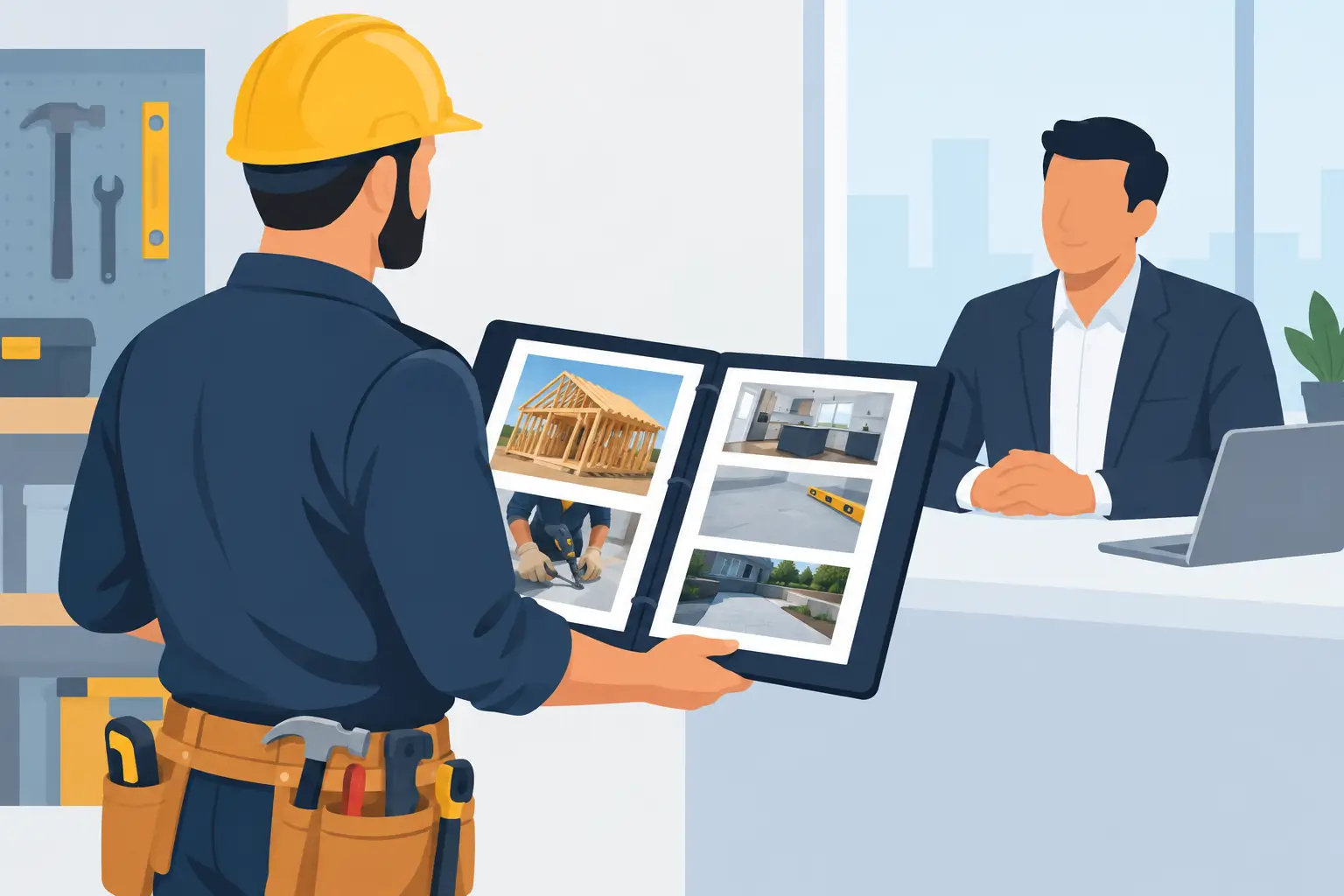
Confident answers can be useful, but proof is better. Ask: “Can you show examples of comparable work?” A portfolio with project photos, role descriptions, credentials, and verified employment history gives the conversation something concrete to examine.
Then ask what the candidate would do differently on a similar job. This question separates people who simply completed a task from people who learned from it. It also shows whether they can take feedback without becoming defensive.
Test Safety Judgment Without Making It a Script
Safety questions should not be a box-checking exercise. Every candidate knows the expected answer to, “Do you care about safety?” The better question is what they do when production pressure conflicts with safe execution.
Ask: “Tell me about a time you stopped work or raised a safety concern. What did you see, who did you notify, and what happened next?”
A strong answer includes a specific hazard, an appropriate escalation path, and an understanding of how work resumed safely. Be cautious when a candidate cannot offer an example, blames everyone else, or treats shortcuts as proof of toughness.
Another useful question is: “If the foreman asks you to complete a task but you believe a required control is missing, what do you do?” The ideal response is not confrontation for its own sake. It is clear communication, verification of the requirement, and a willingness to pause until the condition is corrected.
For roles involving energized systems, heights, confined spaces, heavy equipment, or hazardous materials, ask candidates to explain the controls they use before beginning work. Their answer should reflect the hazards of the job, not a generic safety speech.
Find Out Whether They Will Strengthen the Crew
Technical ability gets a worker through a task. Reliability and crew communication get the project through the week. These areas deserve direct questions because they are often the source of costly hiring misses.
Ask: “What does being ready for the start of shift mean to you?” Listen for more than punctuality. Good answers often include having the right PPE, reviewing the day’s work, checking materials, organizing tools, and communicating early if there is a problem.
Ask: “Describe a disagreement with a foreman, superintendent, or another trade. How did you handle it?” Construction is full of handoffs, schedule pressure, and competing priorities. You want someone who can raise an issue clearly, protect the work, and move toward a solution without creating unnecessary friction.
A practical question about accountability is: “Tell me about a mistake you made on a job and how you corrected it.” Everyone makes mistakes. The concern is not the mistake itself. The concern is whether the candidate hid it, passed blame, or took ownership before it became larger rework.
Finally, ask about availability in plain language. Confirm transportation, expected start date, shift flexibility, travel requirements, overtime expectations, and the likely duration of the assignment. A highly skilled candidate who cannot meet the job’s actual schedule is not the right fit for that opening.
Use Follow-Up Questions to Separate Real Experience From Rehearsed Answers
The first answer is rarely the whole story. Strong interviewers use follow-ups to get specific without turning the conversation into an interrogation.
If a candidate says they led a crew, ask how many people were on it, what work they coordinated, and how they tracked progress. If they say they solved a difficult issue, ask what they tested first and what information changed their approach. If they mention a certification, ask when it was earned and how they apply that training on site.
Specificity matters because real work has details. Experienced tradespeople typically remember constraints, materials, sequence, inspections, weather conditions, access issues, and the other trades involved. They may not use polished interview language, and that is fine. Look for clarity and credible firsthand knowledge, not a perfect presentation.
Score the Interview Before You Compare Candidates
Hiring by gut alone can lead to inconsistent decisions, especially when a project needs people quickly. A simple scorecard keeps the process focused on the work. Rate each candidate against the same core areas: relevant experience, technical process, safety judgment, reliability, communication, and project availability.
Use a defined scale, such as one to five, and write a brief note supporting each score. This protects against giving too much weight to one impressive answer or a familiar personality. It also makes it easier for a project manager, operations leader, and HR partner to make a fast, defensible decision.
Credentials, references, employment history, and background requirements should support the interview, not replace it. Verification confirms what can be documented. The interview confirms how a person thinks, communicates, and approaches the work. Platforms built for skilled trades hiring, including go2work, help employers review verified profiles and project portfolios before the conversation begins, so interview time can focus on fit.
Give Candidates a Clear Next Step
A good trade interview should be efficient and respectful on both sides. Tell the candidate what happens next, when they can expect an answer, and whether there will be a skills test, credential review, or site-specific onboarding step. Workers who are in demand will not wait indefinitely for unclear hiring processes.
The strongest hire is not always the person with the longest resume. It is the person whose proven skills, safety mindset, work habits, and availability line up with the job you need done now. Ask questions that make that fit visible, then move with confidence.